For the last few years, most enterprise conversations around AI have focused on copilots. Ask a question. Generate a draft. Summarize a document. Analyze some data.
Useful, certainly. But still largely dependent on a person initiating each step. The next phase is different.
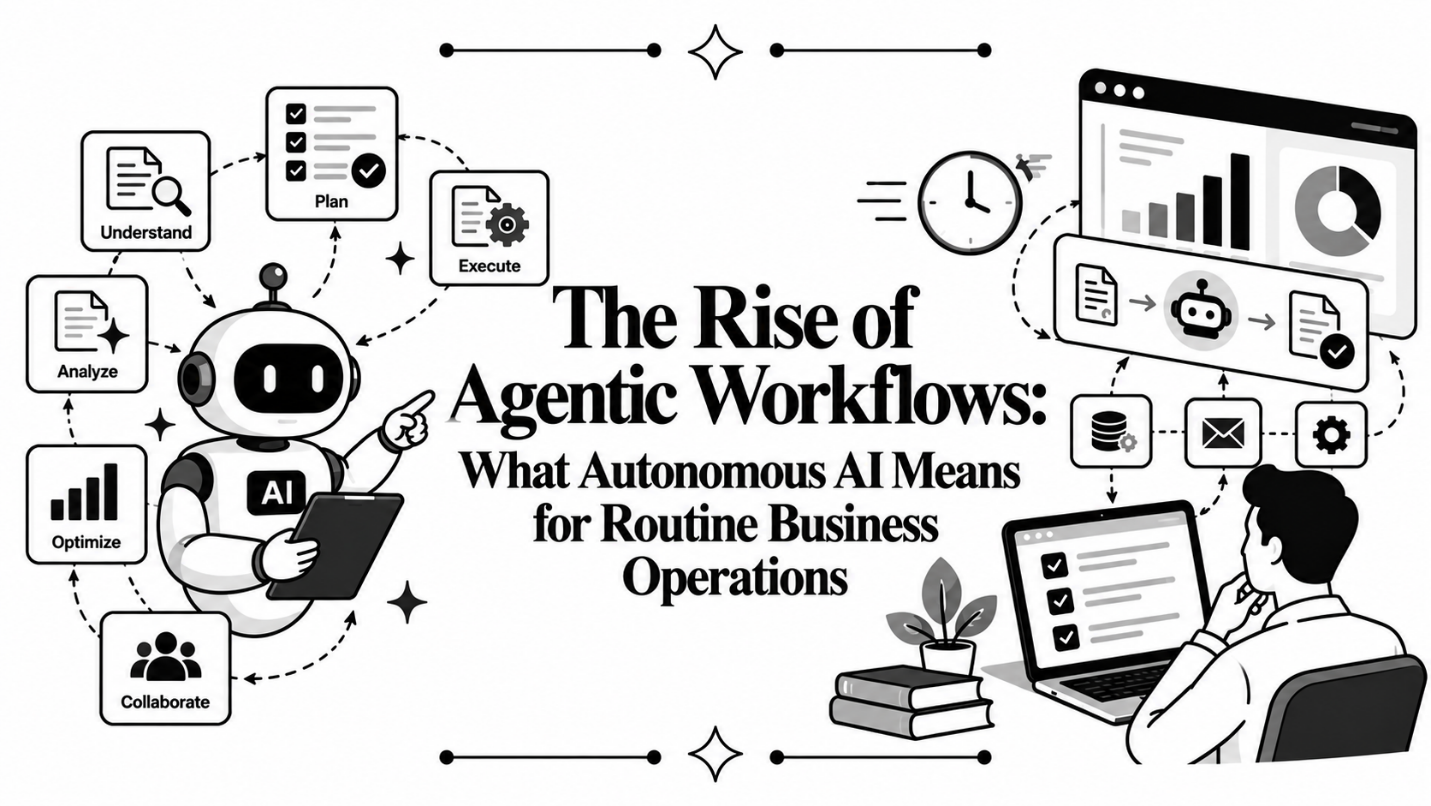
We are starting to see agentic AI workflows where AI does not simply respond to a prompt. It can understand an objective, determine what actions are required, execute a sequence of tasks and involve a person only when necessary. That changes the role of AI inside business operations. Instead of becoming another tool employees use, AI starts becoming part of the workflow itself.
This distinction will become increasingly important over the next few years. From AI Assistants to AI Agents A traditional AI assistant is reactive. One may ask it to summarize a contract, draft an email or analyze a spreadsheet, and it completes that specific task. An AI agent is more outcome-oriented.
Imagine asking an AI system:
“Make sure all customer contracts expiring in the next 90 days are reviewed and assigned to the appropriate account owner.”
Completing that task may require several actions.
The system might need to search the contract repository, identify expiration dates, check renewal provisions, determine account ownership, create tasks, notify relevant employees and escalate high-value agreements.
Instead of asking a user to perform each step separately, an agent can coordinate the entire process.
That is the basic idea behind AI agents for business.
-
Routine Workflows Will Become Event-Driven
Many business processes today depend on people remembering to do something. Someone has to check a dashboard. Someone has to review an inbox. Someone has to notice that a deadline is approaching. Agentic systems can change this.
An event can trigger a workflow automatically. A contract approaching renewal could trigger an analysis of the agreement, check whether pricing should be renegotiated, identify outstanding obligations and notify the account manager.
A new supplier request could trigger compliance checks, contract generation and approval routing. An overdue invoice could initiate an internal review before sending a follow-up. The important shift is that work starts happening because something changed in the business – not because somebody remembered to check.
-
AI Agents Can Coordinate Across Applications
One of the biggest operational problems in enterprises is fragmentation. Sales works in CRM. Legal works in CLM. Finance works in ERP. Customer success has another platform.
Employees spend significant time moving information between these systems. This is where AI agents for business operations can become particularly valuable.
An agent can potentially retrieve information from one application, analyze it, take an action in another system and update the original record.
Consider a new sales opportunity. Once the deal reaches a certain stage, an agent could collect the customer information from CRM, create the appropriate contract, route it for approval, monitor negotiation and update the opportunity when the agreement is signed.
The value does not come from one spectacular AI capability. It comes from removing dozens of small manual handoffs.
-
Human Involvement Moves to Exceptions
A common misconception about autonomous AI is that every workflow will become completely hands-off. I do not think that is how most enterprises will- or should – implement it.
The more practical model is management by exception. Let AI handle predictable steps. Bring people into the process when judgement, approval or risk assessment is required.
For example, an AI agent reviewing vendor agreements might automatically approve contracts that use standard terms and fall below a defined value.
If it finds an unusual indemnity provision, non-standard jurisdiction or significant financial exposure, it routes the agreement to legal. This is much more realistic than attempting to remove humans entirely. The objective is not zero human involvement. It is zero unnecessary human involvement.
-
Agentic Workflows Will Make Business Rules More Important
Autonomy does not eliminate the need for governance. In fact, it makes governance more important. If an AI agent can take actions, companies need to define what it is authorized to do.
Can the agent send an external communication?
Can it approve a contract?
Can it modify financial information?
Can it accept a clause deviation?
At what point must it request human approval?
Effective agentic workflows for enterprises therefore require clear permissions, business rules, audit trails and escalation paths. This is where enterprise AI becomes very different from using a general-purpose chatbot. The system has to understand not only what it can do, but what it is allowed to do.
-
Business Operations Will Become More Proactive
Most enterprise software is designed around dashboards. The system shows information.
A person interprets it. Then someone decides what action to take. Agentic AI can shorten that chain.
Instead of telling procurement that five supplier contracts expire next month, an agent could identify the contracts, analyze current commercial terms, compare supplier performance and prepare renewal recommendations.
Instead of simply flagging an overdue contractual obligation, it could identify the owner, gather the relevant information and initiate the next step. This is where autonomous AI becomes more interesting.
It starts moving enterprise software from systems of record toward systems of action.
The Real Opportunity Is Not Automation for Automation’s Sake
There will undoubtedly be pressure to attach the word “agent” to almost every software feature. That does not make every use case valuable.
The best opportunities for AI agents for business are likely to be processes that are repetitive, rule-driven, cross-functional and currently require employees to coordinate multiple systems. Think contract renewals. Vendor onboarding. Sales approvals. Compliance checks. Invoice reconciliation. Customer onboarding. Reporting.
These workflows contain many routine decisions but still require human intervention when something unusual happens. That is exactly the environment where agentic AI makes sense.
Where This Is Heading
For years, enterprise software has essentially waited for users. Open the application. Search for the record. Check the status. Run the report. Take the next action.
Agentic AI workflows change that relationship. Software can increasingly observe what is happening, understand what needs to be done and initiate the next step.
We are still early, and enterprises will need strong controls around security, permissions, accuracy and accountability.
The future of enterprise AI is unlikely to be defined only by better chat interfaces. It will be defined by AI systems that can participate directly in business operations – while knowing exactly when a human needs to take over.
Frequently Asked Questions
- What are agentic AI workflows?
Agentic AI workflows are business processes in which AI can understand an objective, determine the required steps, execute actions and escalate to humans when necessary.
- How are AI agents different from AI copilots?
AI copilots generally assist users with individual tasks, while AI agents can coordinate multiple actions toward a broader business outcome.
- What are AI agents for business?
AI agents for business are AI systems designed to perform or coordinate operational tasks such as data retrieval, analysis, workflow execution, notifications and approvals.
- What business processes are suitable for AI agents?
Good candidates include contract management, supplier onboarding, sales operations, compliance monitoring, invoice processing, customer onboarding and routine reporting.
- Can AI agents work across multiple enterprise applications?
Yes. When properly integrated, agents can retrieve information from one system and use it to trigger or complete actions in another.
- Will AI agents completely replace employees in routine operations?
In most enterprise environments, the more practical model is partial autonomy. AI handles repetitive tasks while humans manage exceptions, approvals and judgement-intensive decisions.
- What are agentic workflows for enterprises?
Agentic workflows for enterprises are controlled, multi-step AI processes designed to execute business tasks within defined permissions, policies and escalation rules.
- What controls are required for autonomous AI?
Organizations should establish clear permissions, approval thresholds, audit trails, role-based access, escalation paths and monitoring mechanisms.
- What is the biggest benefit of AI agents for business operations?
One of the biggest benefits is reducing manual coordination between people, systems and repetitive workflow steps.
- How should a company start implementing agentic AI?
Start with one well-defined, repetitive process where business rules are clear and the cost of errors is manageable. Establish human approval points, measure outcomes and expand autonomy gradually.