Contract Lifecycle Management is a technology-driven process for automating and centralizing the full life of a contract, from the first request through execution, performance, and renewal or expiry. Done well, it can reduce contract handling times by 50–80% while helping teams control risk, enforce obligations, and turn contracts into usable business data.
Most leadership teams don't need another explanation of why contracts matter. They already know contracts govern revenue, vendor spend, compliance, payment terms, service levels, and renewal rights. What they often need is a clearer answer to a simpler question: what is contract lifecycle management in practical business terms?
The short answer is that CLM is the operating system for enterprise agreements. It replaces scattered files, inbox-driven approvals, and after-the-fact fire drills with a structured workflow that legal, procurement, sales, finance, and operations can all use.
The more strategic answer is this: modern CLM software doesn't just move documents from draft to signature. It converts contract language into structured data. That's where its true power becomes evident. Once clauses, dates, obligations, approvals, and deviations are captured in a searchable system, contracts stop being static PDFs and start functioning like a source of operational intelligence.
Why Poor Contract Management Costs 9% of Your Revenue
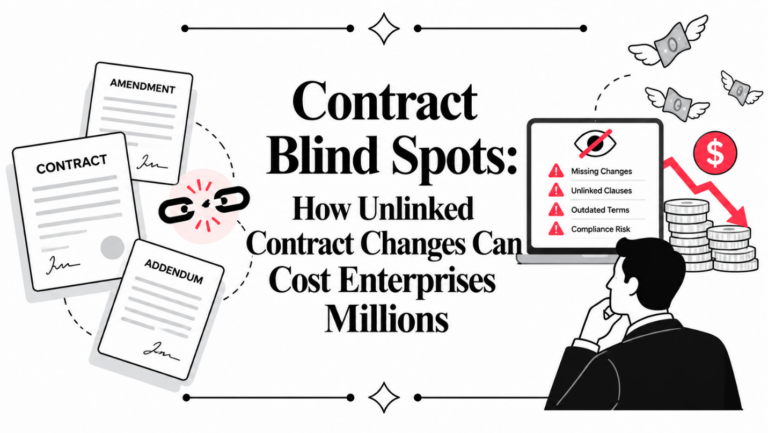
Analysts often cite a striking figure: poor contract management can drain about 9% of annual revenue. Even if a leadership team treats that number as directional rather than precise, the message is hard to miss. Contracts influence pricing, renewals, rebates, obligations, and supplier risk. When those terms are trapped in inboxes and PDFs, revenue slips through ordinary operational gaps.
That leakage rarely comes from one dramatic failure. It comes from small breakdowns that repeat across the business. A renewal notice passes unnoticed. A negotiated pricing term never reaches billing. A service-level commitment sits in a signed agreement but never reaches the team responsible for delivery. A supplier agreement is approved before the vendor due diligence process is complete, and the risk appears after the contract is active.
The pattern is familiar because contracts are often treated like paperwork at signing and forgotten until a dispute, audit, or missed renewal forces attention. Leadership sees the symptom as margin pressure, delayed cash collection, compliance exposure, or vendor underperformance. The contract was the source system all along. The business just never converted it into usable operational data.
Where the leakage actually happens
The losses usually show up in four places:
- Missed renewals: Auto-renew terms preserve unfavorable pricing or let customer agreements expire without a save plan.
- Untracked obligations: Milestones, credits, deliverables, and SLA terms stay buried in static documents.
- Hidden risk exposure: Non-standard legal language survives negotiation but disappears from view after signature.
- Fragmented storage: Sales, legal, procurement, and finance each rely on separate folders or systems, so decisions are based on incomplete information.
A practical test helps clarify the problem. If your team cannot quickly answer which contracts renew next quarter, which agreements contain non-standard liability language, and which obligations are overdue, the business does not have contract visibility. It has contract storage.
That distinction matters.
A shared drive stores documents. A CLM system captures the facts inside those documents and turns them into searchable records, tasks, alerts, and reports. The difference is similar to the difference between keeping receipts in a shoebox and running a finance system. One preserves paperwork. The other helps the business act on it.
Why leaders should care
Poor contract management is not only a legal efficiency issue. It affects revenue retention, cost control, forecasting accuracy, and risk management.
This is also where the strategic case for modern CLM gets stronger. AI-native platforms do more than move an agreement through approval. They extract clause data, dates, obligations, and deviations from unstructured contract text, then feed that information back into workflows, reporting, and renewal decisions. Each new contract improves the quality of the contract dataset. Over time, that creates a data flywheel. Better structure leads to better visibility, which leads to better decisions, which improves the next contract cycle.
For leaders evaluating the financial impact, this analysis of lost revenue from poor contract management in enterprise operations connects day-to-day contract breakdowns to profitability in concrete terms.
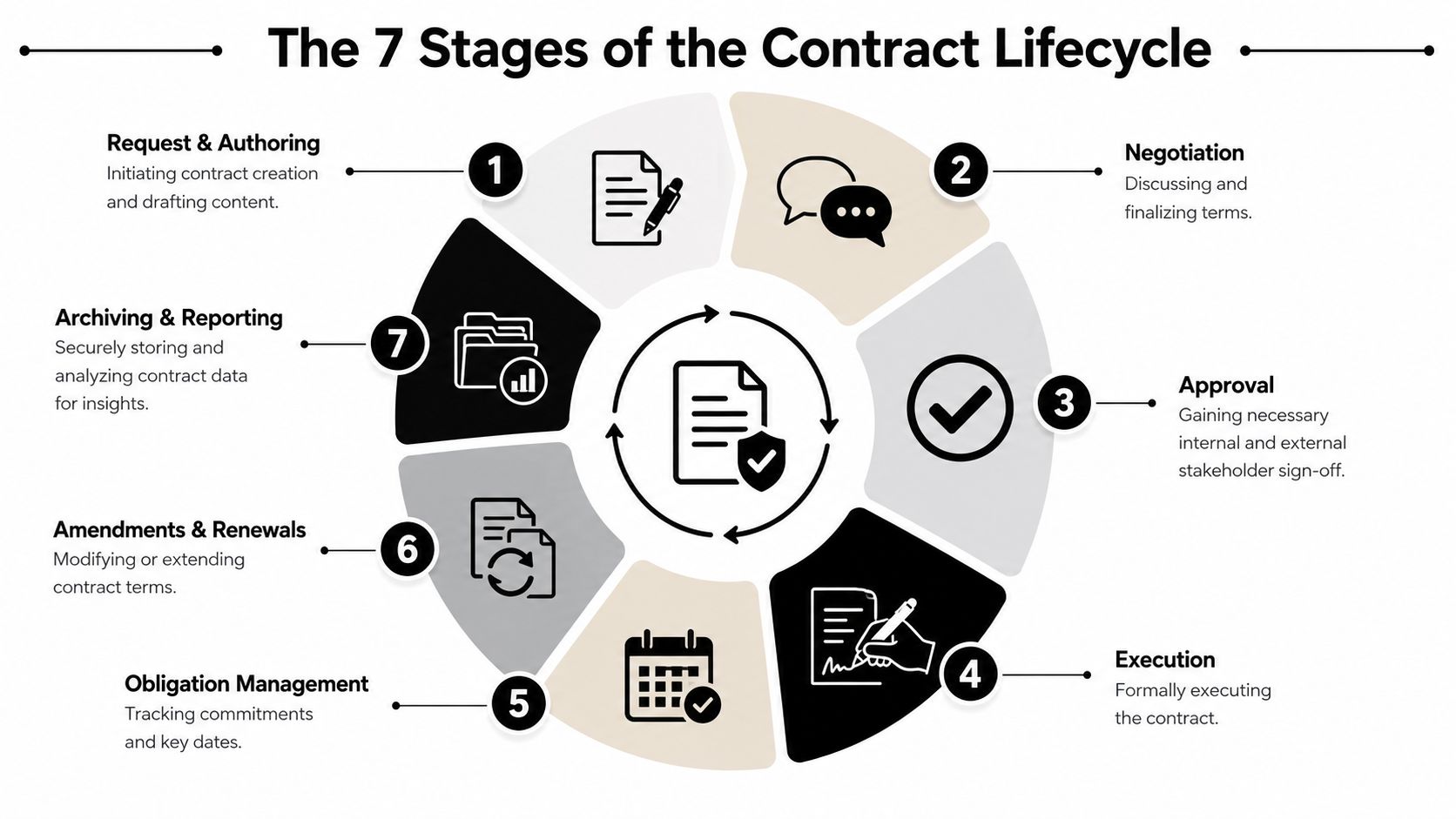
The 7 Stages of the Contract Lifecycle
Organizations that manage contracts well move faster because each stage captures information the next stage can use. The lifecycle is not only a workflow. It is a system for turning legal text into operational data.
That matters at the leadership level.
A contract request starts as a business need, then becomes draft language, approvals, a signed record, and finally a source of obligations, renewal decisions, and reporting. In mature CLM programs, each stage adds structure to the agreement. Over time, that structure becomes a business intelligence asset, not just an archive.
Request and intake
The lifecycle begins when a business user asks for a contract. When intake is weak, requests often arrive by email or chat with missing fields, unclear ownership, and no standard way to describe the deal. Legal then spends time collecting basics such as entity name, contract type, region, value, and urgency before drafting can even start.
A CLM platform fixes this with structured intake forms and routing rules. Instead of chasing facts, the team receives a complete request that can be classified, prioritized, and assigned. The effect is similar to a well-designed CRM form. Better inputs produce cleaner downstream work.
That is why teams evaluating the contract lifecycle management opportunity stage often start with intake discipline first.
Authoring and drafting
Drafting works best when the first version comes from approved templates and clause libraries, not from an attachment copied out of an old email thread.
This stage is where policy becomes repeatable. Sales can generate the right NDA. Procurement can start from current supplier paper. Legal can define preferred clauses, fallback language, and jurisdiction-specific variants once, then reuse them across the business. Platforms such as Legitt AI support this with template libraries and guided drafting, which helps teams standardize language without forcing every agreement into the same mold.
The business outcome is consistency. The data outcome is just as important. If the system knows which template, clause set, and fallback path were used, those choices become searchable later.
Negotiation and redlining
Negotiation is where many organizations lose control of both speed and visibility. Multiple versions circulate. Redlines sit in inboxes. A salesperson may accept a liability change without realizing it affects insurance requirements or margin.
CLM creates order by preserving version history, tracking deviations from standard language, and making exception review easier. AI-assisted review adds another layer. It can identify non-standard clauses, summarize what changed, and flag terms that deserve human review. That does not replace legal judgment. It helps legal focus attention where risk moved.
In practical terms, the system stops treating the contract as a static document and starts treating it as a set of changing data points.
Approval workflows
Approval is less about signatures and more about decision rights. Finance may need to review pricing terms. Security may need to review data handling language. Procurement may need budget confirmation. Legal may need to confirm policy alignment.
Without workflow control, contracts bounce between inboxes and shared folders. Some teams still try to connect Outlook and SharePoint libraries to make that process manageable, but point integrations do not create clear approval logic or audit trails on their own.
A CLM system routes the agreement to the right reviewers based on contract type, value, region, risk level, or clause deviations. Parallel approvals reduce waiting time. Escalation rules reduce ambiguity. Audit logs show who approved what and when.
Execution and eSignature
Once terms are approved, execution should be straightforward. The signed version needs to match the approved version, and the business needs a reliable record of when the agreement became effective.
Integrated eSignature shortens this stage and reduces administrative errors. More importantly, it preserves the chain of custody between draft, approval, and final execution. That sounds procedural, but it has direct business value. If a dispute arises, the company can quickly confirm the governing version and signature history.
Obligation management and renewals
Signature is the midpoint of contract value, not the end of it.
After execution, the contract begins generating work. It may require milestone tracking, invoice validation, service levels, notice periods, rebates, audit support, or renewal decisions. If those terms stay buried in PDFs, the business depends on memory and manual follow-up. If those terms are extracted into structured records, they become tasks, reminders, and dashboard inputs.
The intelligence aspect becomes clear. AI-native CLM platforms can pull dates, obligations, pricing mechanics, and renewal clauses from unstructured text, then feed them into workflows and reporting. Each executed contract adds more structured data to the repository. Each new data point improves the organization's ability to monitor performance and act on time.
Reporting and analytics
The final stage turns contract activity into management insight. Leaders can see where approvals slow down, which clauses get negotiated most often, which vendors carry unusual terms, and which customer agreements are approaching renewal.
A filing cabinet cannot answer those questions. A CLM platform can, because it stores both the document and the facts inside it.
That is why mature CLM programs become more valuable over time. They do not just process contracts faster. They build a data flywheel from the language of every agreement, giving leadership a clearer view of revenue risk, operational commitments, and policy drift.
Unlocking Business Value with CLM Software
Leadership teams usually reach the same point in a CLM discussion. They understand the workflow, then ask a harder question. What changes in the business after the process is digitized?
The answer is broader than faster routing. CLM software improves how the company books revenue, controls risk, monitors commitments, and learns from every agreement it signs. A good platform does for contracts what an ERP does for financial transactions. It turns scattered activity into a system of record, then turns that record into usable management data.
Four ways CLM changes operating performance
Some returns show up quickly, such as shorter cycle times and cleaner approvals. Others build over time as more contracts are stored, tagged, searched, and analyzed.
| Benefit Area | What improves |
|---|---|
| Efficiency | Teams spend less time drafting, chasing approvals, and searching for the latest version |
| Revenue protection | Renewal dates, pricing terms, rebates, and billing triggers are less likely to slip through the cracks |
| Visibility | Leaders can search contract data by clause, vendor, region, obligation, or renewal window |
| Risk and compliance | Standard language, approval rules, and audit trails reduce policy drift and missed commitments |
What those outcomes look like in real workflows
Efficiency improves first. Sales, procurement, legal, and finance stop passing contracts around like email attachments with no chain of custody. Standard templates, clause libraries, and guided approvals reduce rework. Work moves faster because the process is visible, not because people are rushing.
Risk control improves next. CLM software applies rules consistently, which matters more than occasional heroic effort from a few careful reviewers. If fallback clauses are preapproved, if deviations trigger the right approvers, and if notice dates create reminders automatically, the business is less dependent on memory.
Visibility changes the quality of decision-making. A shared drive stores files. A CLM platform stores files plus the facts inside them. That difference matters. Leaders can see which terms appear most often, which suppliers operate outside policy, and where bottlenecks are forming. If your collaboration stack already depends on Microsoft tools, it helps to understand how to connect Outlook and SharePoint libraries so contract communication and storage support the same record.
CLM creates business value when the contract becomes a source of operating data, not just a signed document.
Revenue protection is often the point that gets executive attention. Contracts contain pricing logic, renewal rights, volume commitments, service credits, and notice periods. If those terms remain trapped in PDFs, value leaks out in small, avoidable ways. If the platform converts them into searchable fields, alerts, and workflow triggers, teams can act before margin or revenue is lost. That is why many organizations now connect CLM directly to contract management and revenue realization, rather than treating it as a legal filing system.
A simple example shows the difference. A customer agreement may allow annual price adjustments if notice is sent on time. It may also include service credits if performance drops below the agreed threshold. Without CLM, both terms sit in the document like fine print in a drawer. With CLM, those terms become tracked dates, assigned tasks, and dashboard signals.
That is the strategic shift. CLM software does not only move contracts through a workflow. It turns contract text into structured business intelligence, and each new agreement makes that intelligence more useful. Over time, the repository becomes a data flywheel. The more contracts the company manages well, the better it can forecast risk, protect revenue, and make policy decisions with evidence instead of anecdotes.
How AI Transforms Contract Intelligence and Automation
PwC reports that a large share of contract data still sits in unstructured formats, which is why many AI projects stall before they produce reliable business value. In contract management, the hard part is rarely generating text. The hard part is turning signed agreements into data that a business can search, compare, monitor, and act on.
AI is useful when the contract becomes data
AI in CLM functions like a skilled analyst. Its effectiveness depends on the quality of the data it receives. If contracts live in scattered folders, inconsistent templates, and duplicate versions, the system has little foundation for trustworthy review or automation. If terms are captured in consistent fields and tied to the right workflow, AI can do useful work at scale.
That changes what a contract repository is for. Instead of acting as a digital filing cabinet, it becomes a live operating dataset. Each agreement adds more examples of approved language, negotiated fallback positions, renewal patterns, obligation types, and risk signals. Over time, the platform gets better at identifying what matters because the business has given it structure to learn from.
That is the shift leadership teams should care about.
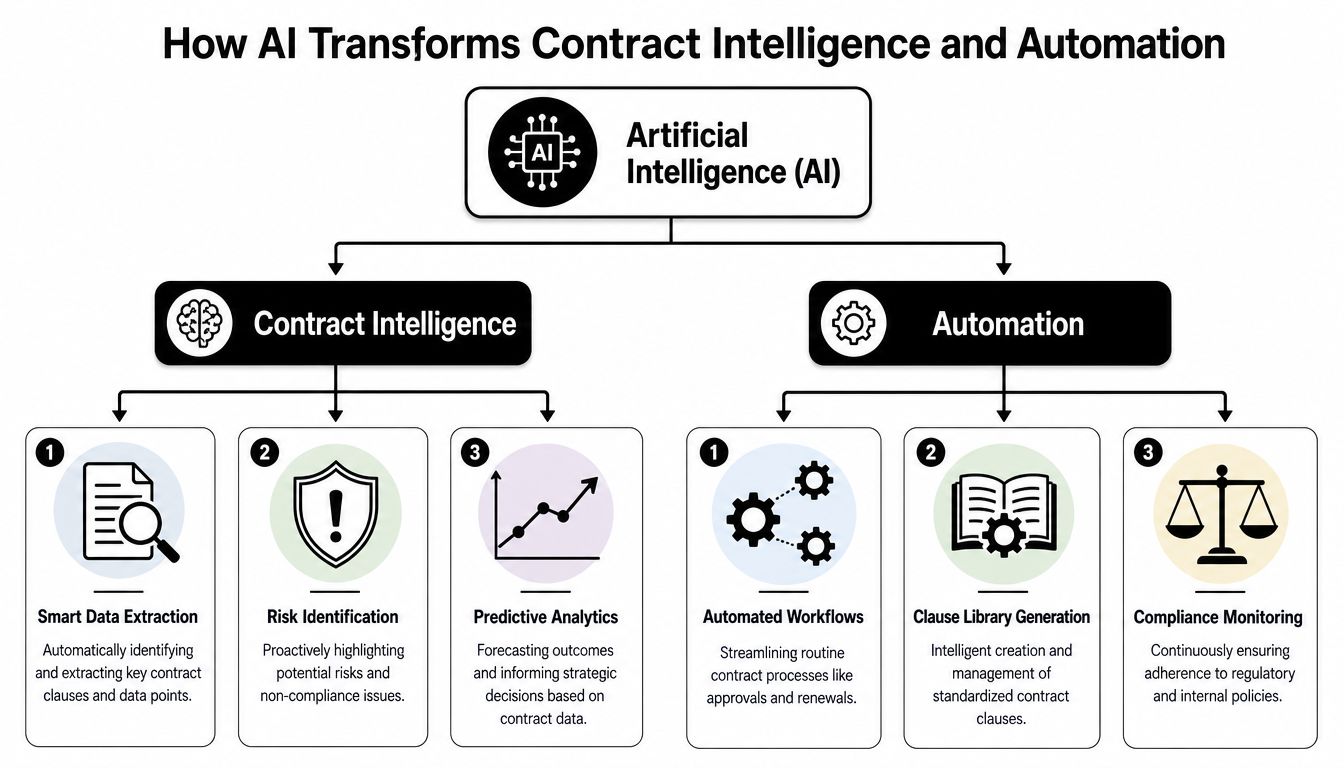
The immediate applications are practical:
- AI-powered drafting: Generate first drafts from approved templates and business inputs.
- Contract review: Compare third-party paper against preferred language and identify deviations.
- Clause extraction: Pull dates, parties, obligations, renewal terms, and risk provisions into fields.
- Contract intelligence: Search the repository by meaning, clause, obligation, or issue pattern.
- Workflow automation: Trigger approvals, reminders, and follow-up actions based on extracted data.
The data stabilization gap most teams underestimate
Some vendors describe “AI-native” CLM as if the intelligence layer appears instantly. In practice, usable AI depends on disciplined inputs. Contracts need to be digitized. Metadata needs consistent labels. Old versions need to be controlled. Repositories need enough standardization that the output means the same thing across legal, sales, procurement, and finance.
A simple analogy helps. If a finance team closes the quarter with three charts of accounts and five naming conventions for the same customer, reporting becomes slow and disputed. Contract AI faces the same problem. It can summarize, compare, and flag issues, but only if the underlying records are organized well enough to support a consistent answer.
This is why the strongest CLM programs create a data flywheel. The business captures terms in structured form. Structured terms trigger workflows and alerts. Those workflows produce cleaner future contracts and better metadata. The next round of analysis is then more accurate and more useful. AI is not just automating tasks here. It is increasing the value of the contract dataset with every cycle.
For teams comparing platforms, this essential guide for UK mid-market firms is useful because it frames software selection around actual process maturity, not just feature checklists.
Where AI helps the business, not just legal
The business case for AI in CLM extends well beyond legal review. Sales teams can spot where customer paper departs from approved commercial terms before a deal slows down. Procurement can identify supplier clauses that create policy conflicts or hidden obligations. Operations teams can track service levels, notice periods, and deliverables before a missed commitment turns into a financial issue.
The most effective platforms place that intelligence inside the workflow where decisions happen. One example discussed in this overview of AI in contract lifecycle management is an embedded assistant that supports extraction, deviation review, and obligation tracking in the same workspace. That model matters because users do not need to leave the contracting process to get answers.
The strategic point is straightforward. AI does more than speed up drafting or summarize clauses. In a well-designed CLM system, it converts unstructured contract text into structured business intelligence that compounds over time. People still make the decisions. AI reduces the manual reading, sorting, and chasing that keep those decisions slow.
Essential Features of an Enterprise CLM Platform
An enterprise CLM platform should do more than move documents from draft to signature. It should turn every contract into usable operating data. That is the difference between a filing system and a business intelligence engine.
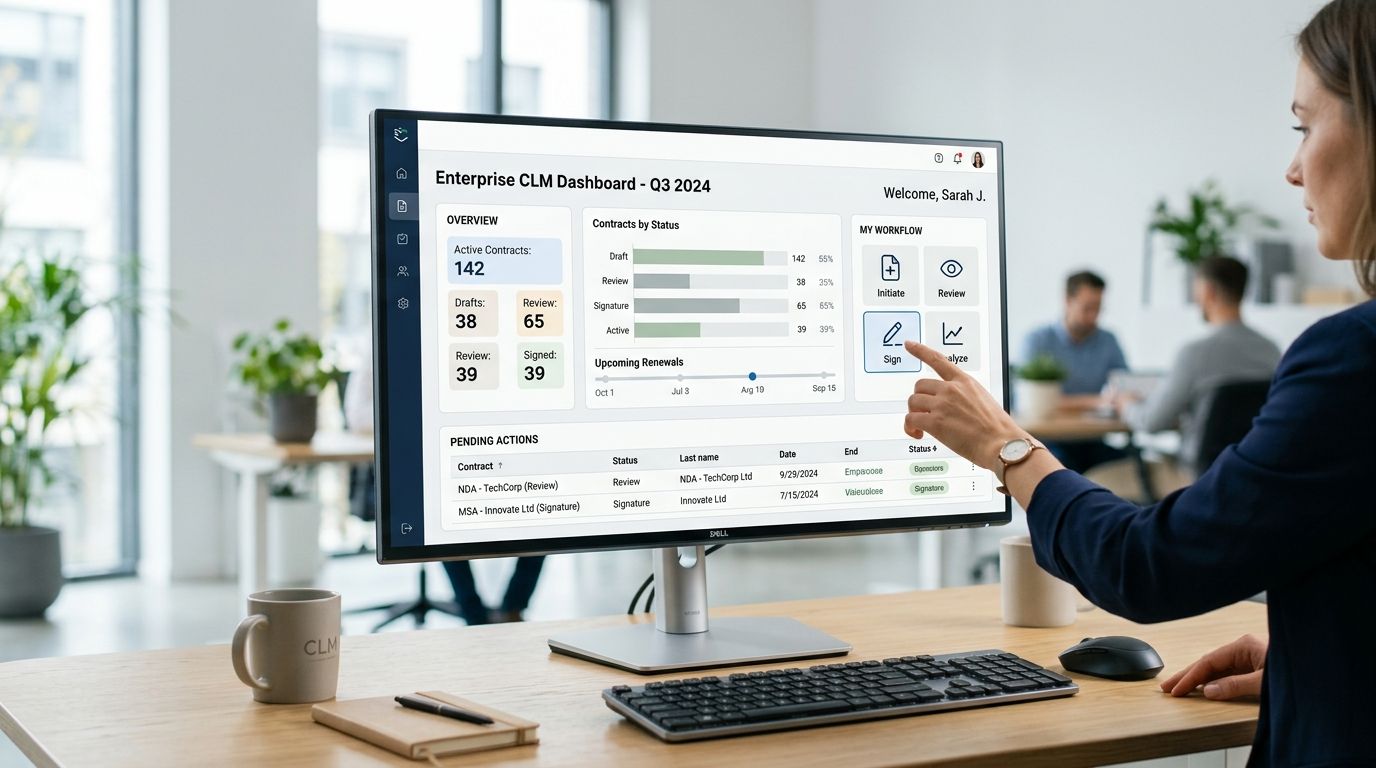
Leaders often start with feature grids, but the better test is practical. Can the platform support intake, drafting, review, approval, signature, obligation tracking, and renewal in one controlled system? Can it also capture what those contracts mean for revenue, risk, supplier performance, and compliance?
That second question matters more than it first appears. A mature CLM platform works like an ERP for legal commitments. It stores the document, but it also captures the dates, clauses, owners, approvals, deviations, and obligations that make the document operational.
The foundation features
The foundation is data discipline. If the basics are weak, automation becomes expensive and reporting becomes unreliable.
Look for:
- Centralized repository: Every version, amendment, and executed agreement should live in one searchable system.
- Structured metadata: Contract type, owner, dates, obligations, and status should be captured in consistent fields.
- Version control: Teams need a clear record of what changed, who changed it, and which file is current.
- Access controls: Role-based permissions should limit exposure and support audit review.
Security requirements also matter at enterprise scale. Teams usually expect controls such as encryption, privacy safeguards, audit logs, and recognized security certifications before they trust a CLM platform with sensitive commercial data.
The workflow features
Workflow determines whether contracts move with control or get stuck in email threads.
A capable platform should route approvals based on rules such as contract value, clause changes, region, or function. It should give business users approved templates and clause libraries, so standard work stays standard. It should also track obligations, renewals, and notice periods after signature, because that is where many companies lose value they thought they had already negotiated.
Collaboration needs structure too. Internal reviewers and counterparties should be able to comment, redline, and approve inside a shared process with status visibility. Electronic signature is part of that picture, but only as one step in the larger chain.
The intelligence and integration features
In this regard, enterprise CLM separates itself from document storage tools.
A strong platform should extract key terms from contracts and map them into searchable fields. It should flag deviations from approved language, connect obligations to owners, and make contract data available to downstream systems. In practical terms, that means a sales agreement can inform revenue operations, a supplier contract can feed procurement controls, and a renewal date can trigger action before margin or service levels slip.
The platform should also connect with the systems where the business already works:
- CRM systems: So deal data flows into contract creation and sales teams are not rekeying information.
- ERP and procurement tools: So purchasing, billing, and supplier records stay aligned.
- Document suites and communication tools: So review, storage, and approvals fit into daily work.
- APIs and workflow connectors: So teams can remove manual handoffs between systems.
For many companies, these requirements become clearer once they document approval paths, fallback language, ownership rules, and post-signature responsibilities in a contract management plan.
If a product mainly stores signed PDFs or offers eSignature without structured data, workflow control, and integrations, it covers only one layer of contract management. Enterprise CLM should help the business read its contracts at scale, act on what they say, and get smarter with every agreement added to the system.
Your Roadmap for a Successful CLM Implementation
Many CLM projects fail for a simple reason. Companies try to automate messy processes without first deciding how contracts should move through the business. Software can accelerate a broken workflow just as easily as a good one.
A successful rollout starts with process discipline and change management, not configuration screens.
Step one is clarity, not customization
Before implementation begins, leadership should agree on a few basics:
- What problem matters most: Slow sales contracts, weak vendor controls, poor renewal visibility, or scattered repositories.
- Who owns the process: Legal may govern policy, but sales, procurement, finance, and operations also need clear responsibilities.
- What success looks like: Faster turnaround, better compliance, cleaner repository data, or stronger renewal management.
This planning work is where many teams discover they need a more formal contract management plan before they choose how much to automate.
Standardize before you automate
The next move is process mapping. Document how contracts enter the business, who approves what, which templates are valid, where redlines happen, and how executed agreements are stored and monitored.
Then simplify.
If two business units use five different approval paths for the same agreement type, the platform won't fix the confusion by itself. You need common rules first. CLM works best when it captures policy in workflow.
A phased rollout beats a big-bang launch. Start with one contract type or one team, fix the rough edges, and expand from there.
Adoption is the real implementation test
A CLM system only creates value when people use it. That means training can't stop at button clicks. Users need to understand why the new process protects revenue, reduces rework, and gives them faster answers.
A practical rollout usually includes:
- Pilot one use case first: Sales agreements or vendor contracts are common starting points.
- Migrate high-value contracts carefully: Old metadata errors create long-term reporting problems.
- Train by role: Legal, procurement, sales, and approvers need different guidance.
- Measure friction early: Watch where users fall back to email or offline edits.
Executive sponsorship matters here. If leadership still approves “just this one contract” outside the system, the rest of the organization will do the same.
Frequently Asked Questions About Contract Lifecycle Management
What's the difference between CLM and a basic contract management system
A basic contract management system usually focuses on storing executed agreements. CLM covers the full lifecycle, including drafting, negotiation, approval, execution, obligation tracking, renewal, and analytics. In simple terms, CMS stores documents. CLM manages the business process around them.
Is CLM software only for the legal department
No. Legal often owns governance, but CLM is cross-functional by design. Procurement uses it for supplier agreements. Sales uses it for customer contracts. Finance relies on payment and renewal visibility. Operations uses it to track commitments tied to service delivery.
How long does a typical CLM implementation take
Implementation timing depends on process complexity, repository quality, number of contract types, and integration scope. A focused rollout for one team is usually much simpler than an enterprise-wide transformation. The faster path is usually a phased launch with standardized templates and clearly defined approval rules.
Can CLM help with third-party paper
Yes. That's one of the most valuable use cases. A CLM platform with contract review and contract intelligence capabilities can help teams analyze customer or vendor paper, identify deviations from approved terms, route exceptions for review, and preserve those decisions for future negotiations.
Does AI replace legal review in CLM
No. AI can accelerate drafting, extraction, and review by surfacing issues faster, but it doesn't replace business judgment or legal accountability. The strongest use of AI in enterprise contract workflows is to reduce repetitive work and spotlight the exceptions that deserve human attention.
If your team is evaluating AI contract management software, Legitt AI is one option to explore for end-to-end drafting, negotiation, eSignatures, repository management, obligation tracking, and contract intelligence in a single workflow. It's designed for legal, procurement, sales, and operations teams that want contracts to move faster and produce better data, not just better storage.