Running a business means sharing sensitive information with people outside your organization.
Your vendor knows your product specs. Your service provider understands your internal processes. Your contractor has seen your pricing model. Yet most businesses share all of this without a single document to protect them.
That is a risk you simply do not need to take.
What Is a Vendor Confidentiality Agreement?
A Vendor NDA is a legal contract between your company and the vendor you work with. It ensures that sensitive information shared during the engagement stays confidential. It cannot be misused, leaked, or passed on to competitors.
Think of it as a handshake, but with legal teeth.
Before creating one, it helps to understand what is a Non-Disclosure Agreement and why it matters. Whether you are outsourcing a service, buying a product, or bringing someone in for a project, the moment you share internal information, you need an NDA in place.
Why Do You Need One?
Most vendors are professional and trustworthy. But businesses do not sign NDAs because they expect betrayal. They sign them because situations can change.
Here is what can go wrong without one:
- Business relationships end, sometimes on bad terms
- Employees at the vendor’s end may leave or change
- Confidential data can be exposed without intention
- You have no legal recourse if something goes wrong
An NDA gives you that protection. Without it, you are left with nothing but a conversation.
How to Create a Vendor NDA Step by Step
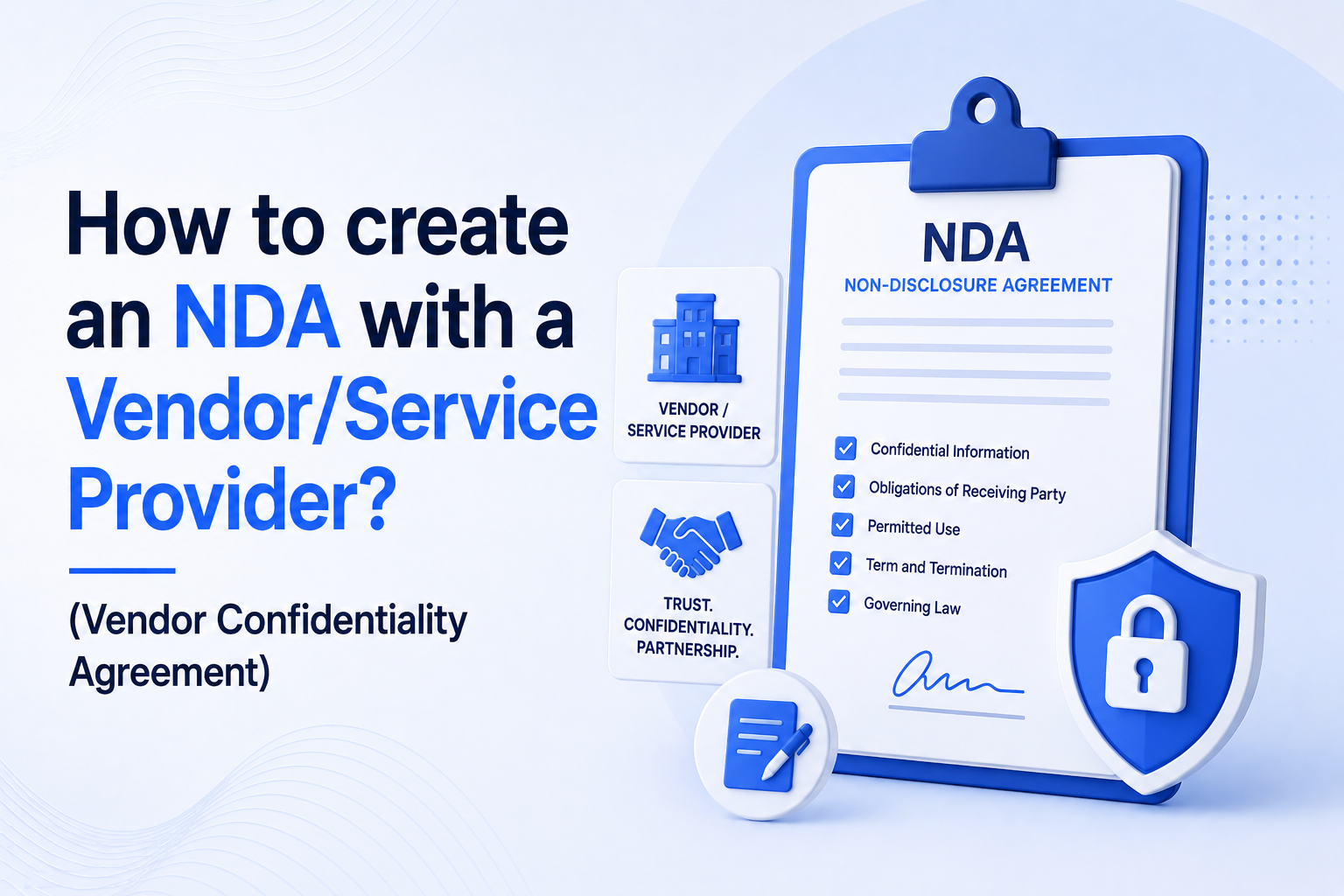
Step 1: Add Contact Information of Both Parties
Start by clearly identifying who is entering the contract. Include the full legal name, address, and contact details of both your company and the vendor.
This seems basic. But it is absolutely critical. If a dispute arises, the first thing any court looks at is whether both parties are properly identified.
Step 2: Define What Is Confidential
This is the most important part of any NDA. It is also where most businesses get it wrong.
Do not just write “confidential information.” Be specific. Clearly list what you are sharing:
- Product specifications and designs
- Pricing and financial data
- Customer or client information
- Business strategies and roadmaps
- Internal processes and workflows
- Proprietary technology or software details
If you want a detailed breakdown, this guide on how to write an NDA that covers everything walks you through every clause step by step.
The clearer you are, the stronger your legal protection. Vague language is a loophole waiting to be used.
Step 3: State the Confidentiality Obligations
This section tells the vendor exactly what they can and cannot do with your information. It typically includes:
- Not sharing information with third parties
- Using it only for the purpose of the engagement
- Taking reasonable steps to prevent unauthorized access
Keep the language firm but fair. Overly aggressive clauses can create friction before the relationship even begins.
Step 4: Include a Post-Engagement Clause
This is the part most businesses miss.
Just because the engagement ends does not mean your information stops being sensitive. A strong NDA must state clearly that confidentiality continues after the contract ends. As long as the information remains a trade secret, the vendor is legally bound to protect it.
Step 5: Get It Signed
An unsigned NDA is just a document. Make sure both parties sign before any information is shared.
Include a dedicated signature section at the end with space for:
- Full name and designation of the signing representative
- Date of signing
- Company name
Digital signatures are completely valid today. Tools like Legitt AI make this fast and seamless. There is no reason to wait for a physical copy.
Common Mistakes to Avoid
Being too vague about confidential information
If it is not listed clearly, it is not protected.
Skipping the post-engagement clause
The contract ending does not mean the obligation ends.
Sharing information before signing
Once the information is out, the NDA loses its practical value.
Using a generic template without changes
Every vendor relationship is different. Your NDA should reflect that.
It is also worth knowing the difference between an NDA vs Confidentiality Agreement. Many businesses use these terms interchangeably when they actually serve different purposes in different situations.
Other NDAs Your Business May Need
A Vendor NDA is just one piece of the puzzle. Depending on who you work with, you may also need:
- General NDA — learn how to create a Non-Disclosure Agreement with the right clauses
- Employer-Employee NDA — to protect internal knowledge when hiring
- Company and Contractor NDA — for freelancers and short-term projects
- Company and Client NDA — when clients share sensitive briefs or strategies with you
Create Your Vendor NDA in Minutes with Legitt AI
Writing an NDA from scratch takes time. Getting the language wrong can cost you even more.
Legitt AI makes the entire process simple. Start from an expert-built template, customize it for your vendor, send it for signatures, and track the full contract lifecycle from one platform.
No legal jargon. No back and forth. Just a clean, professional agreement ready to protect your business.
Also read: What is a Non-Disclosure Agreement?