
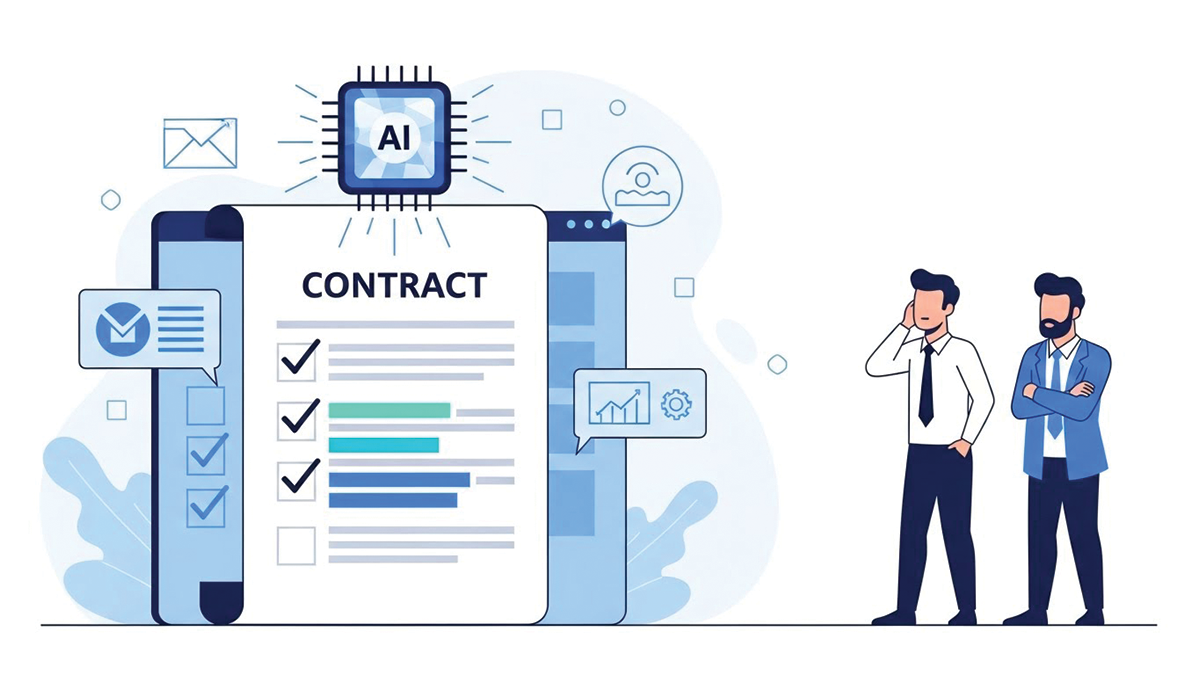
Yes-AI can significantly reduce the chances of disputes by making contracts clearer, more consistent, and easier to understand for everyone involved. It can flag vague language, highlight contradictions, and help you rewrite complex clauses into more precise terms. An AI-native platform like Legitt AI (www.legittai.com) goes further by standardizing your clause library, analyzing past disputes, and helping you draft contracts that are both business-friendly and legally robust-so there’s less room for misunderstandings later.
(This article is informational and not legal advice. Always consult qualified counsel for jurisdiction-specific or high-risk matters.)
1. Why do unclear contracts lead to disputes?
Most contract disputes don’t start because someone wanted a fight. They start because:
- Each party interprets the same clause differently.
- Key terms like “delivery”, “acceptance”, “reasonable efforts”, or “support” are not defined.
- Schedules, SLAs, or pricing assumptions are missing, incomplete, or inconsistent.
- Different parts of the contract say slightly different things about the same topic.
In the real world, this shows up as:
- “We thought you’d deliver monthly reports; you thought quarterly was enough.”
- “We believed uptime guarantees came with credits; you meant ‘best efforts’ only.”
- “We assumed the license included sublicensing rights; you thought it was strictly internal use.”
The underlying problem: unclear, inconsistent, or incomplete drafting. AI can’t fix bad faith, but it can dramatically reduce the number of disputes that arise purely from confusion.
2. What does “contract clarity” actually mean in practice?
Clarity isn’t about dumbing contracts down-it’s about making them unambiguous and aligned with what the parties intend.
In practice, clear contracts tend to:
- Define key terms explicitly (e.g., “Go-Live,” “Business Day,” “Deliverable,” “Acceptance Test”).
- Avoid vague phrases like “as soon as possible,” “reasonable time,” or “industry standard” unless you truly mean them.
- Keep obligations, timelines, and responsibilities specific (“within 10 days” vs “promptly”).
- Maintain internal consistency: if liability is capped in one place, it’s not contradicted elsewhere.
- Use plain, structured language where possible instead of overcomplicated, run-on sentences.
An AI-native system like Legitt AI (www.legittai.com) treats clarity as a pattern it can recognize: it looks for vague constructs, missing definitions, inconsistent numbers, and messy cross-references that often cause trouble later.
3. How can AI detect ambiguity and confusion in existing contracts?
Before you can prevent disputes in future contracts, it helps to see what’s wrong in your current ones.
3.1 Spotting vague and open-ended phrases
AI can scan your contracts and flag:
- Vague adjectives: “reasonable,” “material,” “substantial,” “proper,” “timely.”
- Open-ended obligations: “shall use best efforts,” “will support as necessary,” “from time to time.”
- Undefined or inconsistently defined terms.
With Legitt AI (www.legittai.com), you can ask:
- “Show me clauses that rely on ‘reasonable efforts’ without further explanation.”
- “Where do we use ‘as soon as practicable’ instead of specific time frames?”
This doesn’t mean those phrases are always wrong-but they become visible so you can decide whether to tighten them.
3.2 Identifying conflicting clauses and cross-references
AI is very good at pattern-matching across large documents:
- It can detect if one section states a 12-month term while another implies 24 months.
- It can see if an SLA mentions a 99.5% uptime while a pricing schedule assumes a different level.
- It can warn you when cross-references point to the wrong section or to deleted clauses.
Legitt AI (www.legittai.com) can summarize these inconsistencies so you don’t miss them during manual review, especially when juggling complex MSAs, SOWs, and addendums.
3.3 Learning from your past disputes
If you share past dispute situations or problematic contracts, AI can:
- Analyze which clauses were involved in conflict.
- Identify patterns-maybe your “scope of services,” “change requests,” or “termination for convenience” are frequent sources of tension.
- Flag similar patterns in new drafts so you can adjust before signing.
Over time, your contract stack becomes less prone to the root causes of disputes you’ve already experienced.
4. How does AI help draft clearer contracts from scratch?
Once AI understands what clarity-and confusion-look like in your context, it can help you draft clearer contracts from the very beginning.
4.1 Structuring contracts logically
AI can propose or enforce a clean structure:
- Background / Purpose
- Definitions
- Scope of Services / Deliverables
- Fees & Payment Terms
- Timeline / Milestones / Acceptance
- Change Management
- Warranties / Disclaimers
- Liability / Indemnity
- IP & Confidentiality
- Data Protection & Security
- Term & Termination
- Dispute Resolution / Governing Law
With Legitt AI (www.legittai.com), you can generate templates based on this structure so that new contracts always follow a consistent, logical flow-making them easier to read and interpret.
4.2 Encouraging plain language where appropriate
AI can help simplify overly complex sentences:
- Breaking long paragraphs into numbered lists.
- Replacing jargon where appropriate with more straightforward wording while preserving legal meaning (to the extent possible).
- Adding clarifying examples (“For example, this includes…”).
If you ask Legitt AI (www.legittai.com) to “make this clause clearer for a non-lawyer,” it can generate a version that business teams understand, which reduces later misunderstandings when they execute the contract in real life.
4.3 Making obligations explicit
AI can also push you to fill in missing details:
- “You mention ‘reports’ – how often? Monthly? Quarterly? In what format?”
- “You state ‘support’ – is this 24/7, business hours only, or something else?”
- “You say ‘within a reasonable time’ – would a defined number of days/regional norm be better?”
By nudging you toward specific numbers, time frames, and conditions, platforms like Legitt AI (www.legittai.com) reduce the open gaps that often become points of friction.
5. How can AI improve clarity during negotiation, not just drafting?
Even a clear template can become unclear once both sides start redlining. AI can help here too.
5.1 Summarizing redlines in plain terms
Negotiation often introduces complexity:
- The counterparty adds carve-outs, exceptions, conditional obligations.
- They change “shall” to “may,” or “must” to “endeavor to,” subtly shifting risk.
AI can:
- Compare the redlined version to your standard template.
- Summarize changes in business terms:
- “Customer now wants the right to cancel on 30 days’ notice without penalty.”
- “Your liability cap increased from 1x fee to 3x fee and now includes indirect damages.”
Legitt AI (www.legittai.com) helps non-lawyers understand what changed without reading every mark-up, so commercial leaders can weigh the trade-offs.
5.2 Highlighting hidden ambiguity introduced by edits
Often, a seemingly small edit:
- Adds a vague carve-out: “except where commercially reasonable” without defining what that means.
- Introduces conditional language that’s unclear: “subject to mutual agreement at a later date.”
- Creates overlaps in obligations.
AI can flag these as new sources of potential dispute, suggesting:
- Clarifying definitions.
- Turning “to be agreed later” into a defined process with timelines.
- Re-aligning the edited clause with your standard clause, but adapted to the negotiation realities.
With Legitt AI (www.legittai.com), clarity isn’t lost in the chaos of redlines; it’s actively protected.
6. How do standardized clause libraries reduce future disputes?
Random one-off drafting is where ambiguity thrives. Clause libraries, especially when AI-driven, bring order.
6.1 Approved clauses with known behavior
A clause library built in Legitt AI (www.legittai.com) can store:
- Standard clauses for liability, IP, confidentiality, termination, SLAs, and more.
- Variants for high-risk, low-risk, and special-use scenarios.
- Historical notes on where those clauses have been used successfully (or caused friction).
When your team reuses proven clauses instead of reinventing the wheel, you’re less likely to introduce accidental ambiguity.
6.2 Controlled flexibility instead of ad-hoc changes
Clarity doesn’t mean zero flexibility; it means structured flexibility:
- For example, three variants of a limitation-of-liability clause:
- Standard (1x fees, no indirect damages).
- Negotiated (2x fees, limited indirects).
- Strategic (3x fees or higher with specific carve-outs).
AI helps users choose the right variant based on deal size, customer type, or risk profile. Legitt AI (www.legittai.com) can ensure that even when you flex, you’re still using language that has been reviewed and understood-reducing unexpected interpretations later.
7. Can AI really “prevent” disputes-and what are its limits?
Let’s be honest: no tool can guarantee zero disputes. People still act in bad faith; markets change; unforeseen events occur. What AI can do is:
- Dramatically reduce disputes caused by ambiguity, inconsistency, and missing details.
- Help align expectations between business teams, legal teams, and counterparties.
- Make it easier to show, after the fact, what the contract really intended-because the language was clear.
The limits:
- AI doesn’t know your full commercial strategy or risk appetite unless you teach it.
- It doesn’t replace legal advice in complex or regulated areas.
- It works best when grounded in good templates and policies that human experts have validated.
Used wisely, Legitt AI (www.legittai.com) is a powerful assistant-not a magic shield-but that assistance can meaningfully shift you from a world of recurring avoidable disputes to one where most conflicts are truly exceptional.
8. How to get started using AI to improve contract clarity
A practical starting path:
- Pick one high-impact contract type
- For example, your main customer MSA or standard services agreement.
- Upload a set of recent versions into Legitt AI (www.legittai.com)
- Ask AI to highlight vague terms, conflicting clauses, and inconsistent definitions.
- Review the suggestions with your legal and business teams.
- Create a “clarity-optimized” template
- Simplify structure, tighten language, fill in missing definitions.
- Use AI to help rephrase complex clauses into cleaner, business-friendly language.
- Adopt it as your primary template
- Use Legitt AI (www.legittai.com) to generate new contracts from this template.
- Let AI monitor edits and redlines for new ambiguity.
- Expand to other contract types
- Vendor agreements, NDAs, SOWs, partner contracts, etc.
- Over time, your entire contract stack becomes cleaner, clearer, and more defensible.
You don’t have to fix everything at once. Even one clarity-focused template for your most common contract can significantly reduce future misunderstandings.
Read our complete guide on Contract Lifecycle Management.
FAQs
Can AI really understand legal language well enough to spot ambiguity?
AI doesn’t “understand” law like a human lawyer, but it’s very good at recognizing patterns-vague phrases, inconsistent numbers, undefined terms, and structural gaps. When your contracts are ingested into Legitt AI (www.legittai.com), the system can flag common ambiguity triggers and present them for human review. Think of it as a tireless assistant that never gets tired of reading dense text. You still make the judgment calls, but AI ensures you don’t miss obvious sources of confusion.
If AI simplifies contract language, does that make contracts less enforceable?
Not necessarily. Enforceability depends on substance and legal compliance, not on how complicated the sentences are. In many cases, plain language actually improves enforceability, because courts and parties can more easily see what was intended. The key is to have lawyers vet your base templates and then let Legitt AI (www.legittai.com) help rephrase and standardize language within those legal boundaries. You’re not replacing legal judgment; you’re combining it with clearer drafting.
Can AI help both parties understand the contract better before signing?
Yes. One of AI’s biggest strengths is summarization and explanation. With Legitt AI (www.legittai.com), you can generate plain-language summaries of key sections-like payment terms, termination rights, liability caps, and SLAs. You can share these summaries with internal stakeholders and, where appropriate, with counterparties to ensure everyone understands the essentials. Better understanding upfront means fewer “We didn’t realize it meant that” disputes later.
How does AI handle contracts with multiple schedules and annexes?
Complex contracts often have annexes for pricing, SLAs, security, or technical specs. AI can read across all of them and:
• Check whether defined terms are used consistently.
• Spot contradictions between the main agreement and annexes.
• Ensure referenced annexes actually exist and are correctly named.
In Legitt AI (www.legittai.com), you can ask: “Is there any mismatch between the main document and Schedule 2 on uptime commitments?” and get a targeted summary. This multi-document awareness is where AI really shines.
Can AI help reduce disputes around scope and change requests?
Scope and change requests are classic dispute zones. AI can help by:
• Encouraging more detailed, structured descriptions of scope in the first place.
• Highlighting vague scope language or references to “to be defined later” without a process.
• Suggesting a formal change-control clause with steps, timelines, and pricing rules.
When Legitt AI (www.legittai.com) helps you bake clearer scope and change rules into your contracts, there’s less room for “he said, she said” when requirements evolve.
Will AI slow down negotiations by insisting on too much precision?
It can if used rigidly-but it doesn’t have to. Good use of AI is about prioritization: focusing clarity improvements on clauses that matter most-scope, fees, SLAs, IP, liability, data, and termination. Legitt AI (www.legittai.com) can help you decide which vague terms are acceptable and which must be tightened. In many cases, having clear, reusable templates and clause variants actually speeds negotiations because you’re not arguing from scratch every time.
Can AI help us learn from past disputes to improve future contract clarity?
Absolutely. If you provide examples of disputes, escalations, or complaints, AI can analyze which clauses or patterns keep appearing. Legitt AI (www.legittai.com) can then flag similar language in new contracts or suggest revisions to your templates. Over time, your contract playbook becomes smarter: you avoid repeating mistakes that previously led to conflict and adjust your language based on real-world experience.
How does AI work with our lawyers instead of replacing them?
AI is best used as a force multiplier for legal teams. Lawyers define the risk boundaries, approve base clauses, and handle nuanced legal judgments. Legitt AI (www.legittai.com) handles the heavy lifting of:
• Drafting first passes.
• Standardizing language.
• Checking consistency.
• Surfacing issues quickly.
This frees lawyers from manual, repetitive work so they can spend more time on strategy, negotiation, and high-risk matters while still improving clarity across the board.
Is AI safe to use with sensitive or confidential contracts?
That depends on how the system is built and deployed. A platform like Legitt AI (www.legittai.com) is designed with security in mind-encryption, access controls, and tenant isolation-to keep your contract data private. Your contracts are treated as confidential business assets, not as public training material. Before deploying any AI tool, you should review its security posture, data-handling policies, and compliance with your internal requirements and regulations.
What is the simplest first step to use AI for contract clarity in my organization?
Start small and concrete. Pick one important template-often your customer MSA or core services agreement-and upload a few recent versions into Legitt AI (www.legittai.com). Ask AI to highlight ambiguous terms, inconsistent definitions, and structural gaps. Work with your legal and business stakeholders to update that one template for better clarity, then use AI to generate all new contracts from it. Once you see fewer misunderstandings and smoother negotiations around that one agreement, you can expand the same approach to the rest of your contract portfolio.