A contract doesn't usually fail all at once. It slips.
A renewal notice gets buried in email. A vendor adds a data handling clause that no one spots during redlines. Sales agrees to a service level the delivery team cannot meet. Legal catches some of it, procurement catches different parts, and operations finds the rest after the contract is signed. By then, the issue isn't “contract management.” It's lost margin, audit exposure, delayed revenue, or a dispute that burns executive time.
That's why process risk analysis matters in contract lifecycle management. It gives teams a disciplined way to find where contract workflows break, measure which failures matter most, and put controls in place before the damage shows up in finance, compliance, or customer operations.
Most business guides stay too abstract. Most engineering-style guides are too technical for legal and procurement teams. The useful middle ground is this: treat the contract lifecycle like any other critical business process. Map failure points. Score them consistently. Fix the highest-risk ones first. Monitor whether the controls work.
Beyond Firefighting Proactive Contract Risk Management
A common pattern looks like this. A company signs a vendor agreement on third-party paper, negotiates hard on price, and moves fast because the business needs the tool live by quarter end. Six months later, finance discovers an auto-renewal with an uplift no one planned for. At the same time, security asks why the vendor can sub-process data under terms that don't match internal policy. Nobody made a reckless decision. The process just had blind spots.
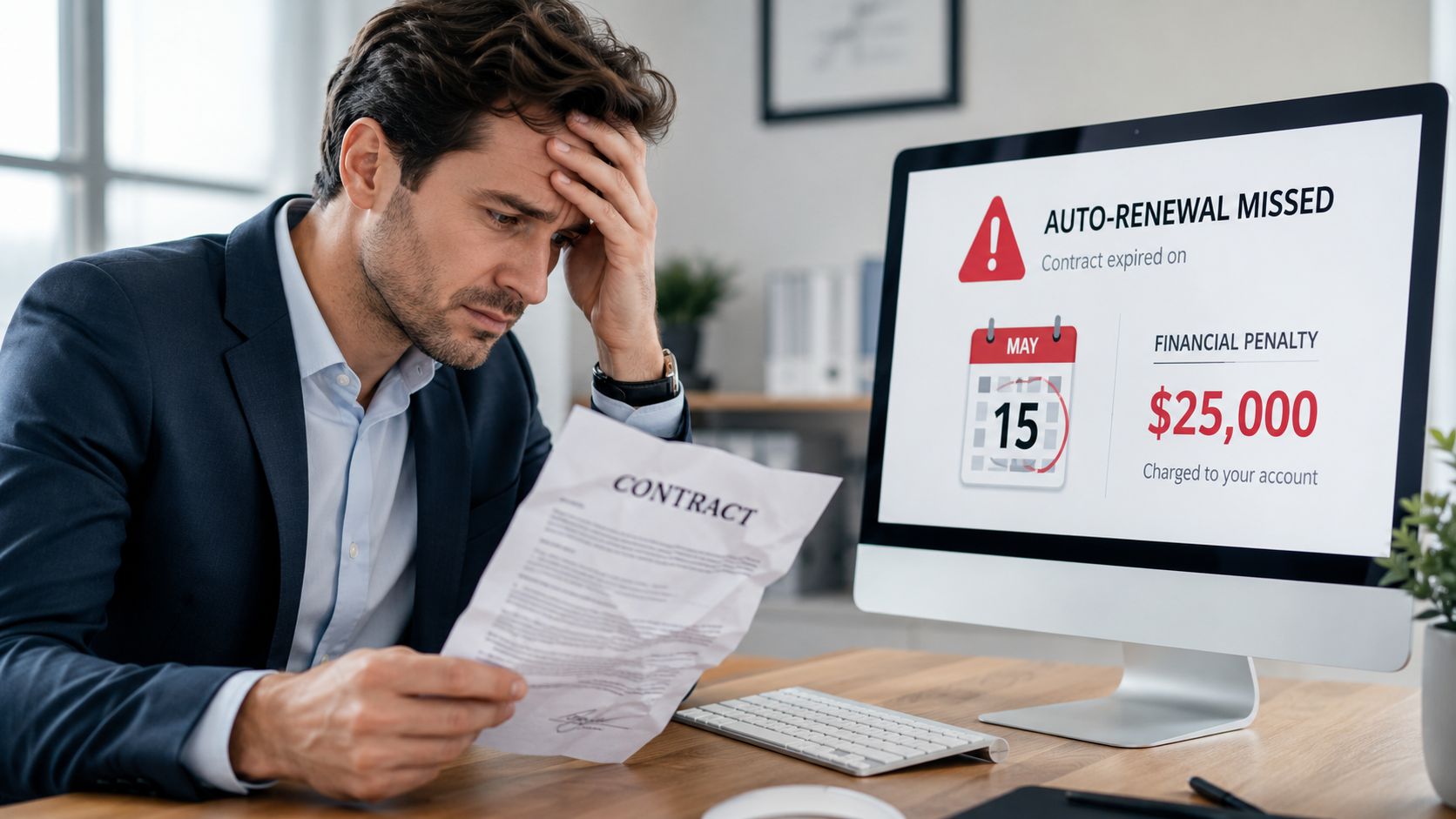
In contract operations, process risk analysis means examining how agreements are requested, drafted, reviewed, approved, signed, stored, and managed after signature to identify where risk enters the workflow. The point isn't to eliminate all risk. It's to stop avoidable failures from reaching the business.
What reactive teams usually miss
Teams in firefighting mode tend to focus on the visible issue in front of them.
- Legal reviews clauses. But legal may not own renewal tracking or obligation follow-through.
- Procurement pushes turnaround. But speed can hide weak approval controls.
- Sales wants signature. But non-standard commitments can create delivery and margin risk later.
- Operations inherits the contract. But they often weren't in the negotiation loop.
That fragmentation is where contract risk grows. A practical discussion of protecting startup revenue with contracts is useful here because revenue protection often starts with basic drafting discipline, clear responsibilities, and commercial terms that can be operationalized.
Practical rule: If your team only discovers contract risk after signature, you don't have a risk process. You have an incident response habit.
What proactive management looks like
A stronger model treats contract risk as a workflow problem, not just a clause problem. It asks:
- Where do deviations from approved language enter?
- Which approval bottlenecks cause rushed decisions?
- Which obligations are hard to track after execution?
- Which contract types repeatedly create disputes, revenue leakage, or compliance work?
That shift changes how teams work. They stop relying on memory and inbox searches. They start using intake rules, playbooks, approval paths, repositories, and post-signature tracking. A practical example of this operating model appears in post-signing contract risk management strategies, especially where the signed agreement becomes the beginning of risk management rather than the end of legal review.
Choosing Your Toolkit Common Risk Analysis Methodologies
Most contract teams don't need an engineering degree to use risk methodology. They need a simple way to choose the right lens for the problem in front of them.
Three methods are especially useful as mental models in CLM work: FMEA, HAZOP, and LOPA. They come from safety and operational disciplines, but they translate surprisingly well to legal operations when you adapt them to workflows, approvals, clause deviations, and post-signature controls.
FMEA for ranking contract failure modes
Failure Mode and Effects Analysis, or FMEA, is the most practical starting point for legal and procurement teams. It breaks a process into possible failure modes, then scores each one based on severity, occurrence, and detection. The resulting Risk Priority Number, or RPN, helps teams decide what to fix first.
Verified guidance on process risk analysis notes that organizations often focus improvement efforts on the top 20% of high RPNs, which helps direct resources toward the failure modes that pose the greatest threat to operations, as discussed in the APM paper on project risk analysis and management.
In CLM, an FMEA exercise might include:
- non-standard indemnity accepted without escalation
- pricing mismatch between quote and final contract
- missing renewal notice field in repository metadata
- obligation owner not assigned after signature
HAZOP for spotting deviations in workflows
HAZOP, or Hazard and Operability Study, is more structured and more conversational. It uses guidewords to identify deviations from intended process design.
A contract team can adapt this by taking a core workflow and asking deviation questions such as:
- what if approval is skipped?
- what if review is delayed?
- what if the wrong template is used?
- what if a required clause is removed?
- what if execution happens before finance approval?
This is especially effective when legal ops runs workshops with sales, procurement, security, and finance. If your team wants a cleaner understanding of how methodology itself works, a piece on mastering academic methodology papers can help clarify how structured methods are built and applied.
LOPA for control design
LOPA, or Layer of Protection Analysis, matters when the issue isn't identifying risk but deciding whether controls are strong enough. In process safety, LOPA is a semi-quantitative method that complements the qualitative HAZOP approach. It calculates incident likelihood by ensuring each independent protection layer has a Probability of Failure on Demand of ≤0.1, achieving a risk reduction factor of 10 or more according to the Sigma HSE overview of process safety risk assessment.
In contract management, the translation is straightforward. One control rarely solves a risky workflow. A fallback clause library, approval routing, legal playbook, and final signatory check may all be needed. If those controls depend on the same person, the same inbox, or the same unchecked manual step, they aren't really independent.
For a more direct contract application, this kind of layered thinking pairs well with contract risk assessment.
Comparing Process Risk Analysis Methodologies
| Methodology | Core Principle | Best For… | Example in CLM |
|---|---|---|---|
| FMEA | Score failure modes by severity, occurrence, and detection | Prioritizing which contract process failures to address first | Ranking missed renewals, approval bypasses, and clause deviations |
| HAZOP | Use structured guidewords to identify deviations from intended process flow | Cross-functional workflow reviews | Testing where intake, review, or approval steps break down |
| LOPA | Evaluate whether layered controls reduce risk to an acceptable level | Designing stronger controls for high-risk contract paths | Checking whether playbooks, approvals, and signatory checks are truly independent |
Teams usually get the most traction by starting with FMEA, using HAZOP in workshops, and borrowing LOPA logic when designing controls for the highest-risk contract paths.
The 5 Step Framework for Contract Process Risk Analysis
The contract lifecycle gets easier to manage when risk analysis becomes repeatable. A five-step model works well because it's detailed enough for serious governance and simple enough for legal, procurement, sales, and operations to use together.
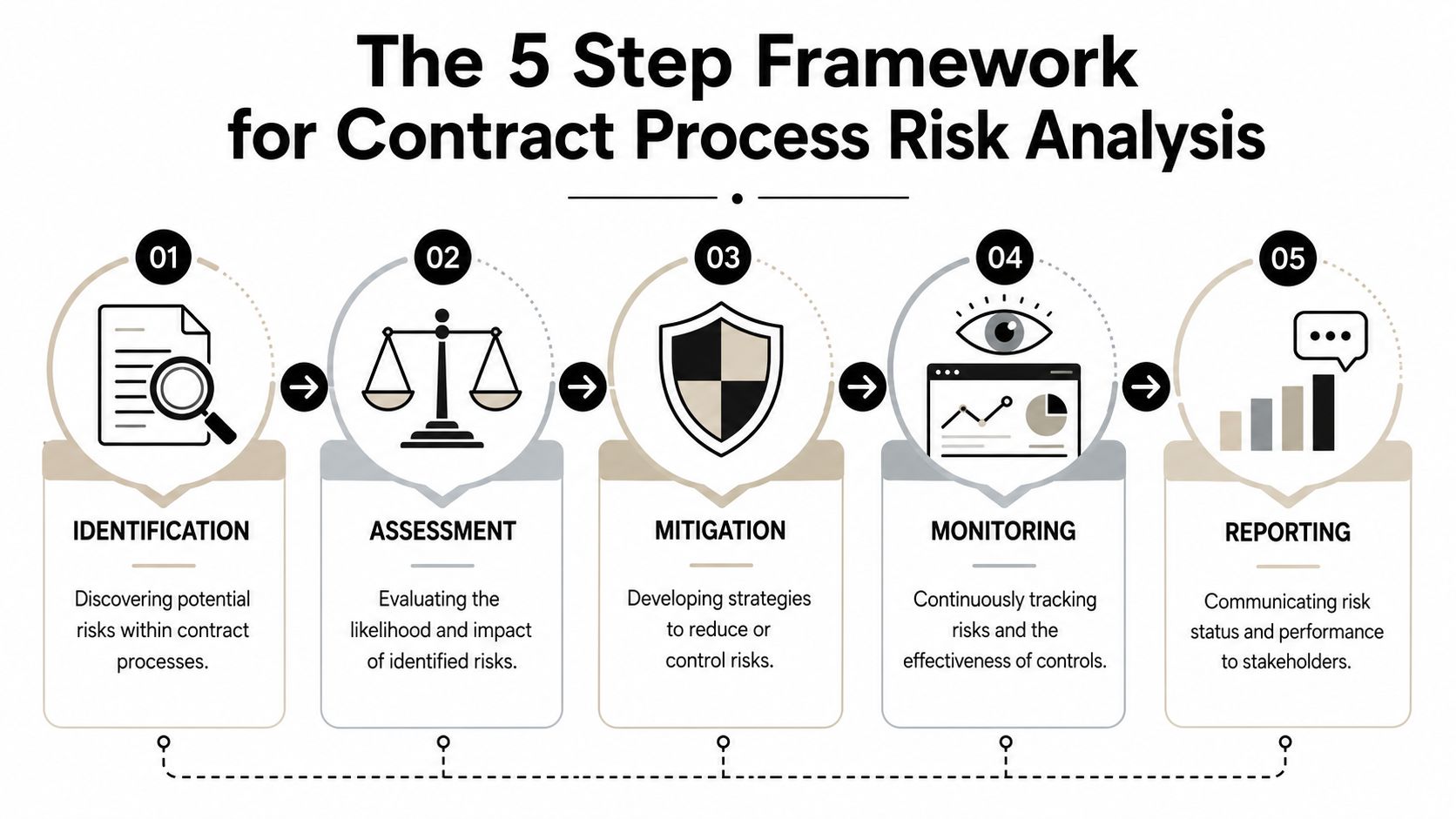
Step 1 Identification
Start by listing where contract risk can enter the process. Don't limit this to legal terms.
Look at the full workflow:
- Intake risk: unclear request data, wrong contract type, missing business owner
- Drafting risk: outdated templates, inconsistent fallback language, manual copy-paste
- Negotiation risk: unapproved edits on liability, data use, termination, or service levels
- Approval risk: skipped approvers, unclear delegation, approvals stuck in inboxes
- Execution risk: wrong signatory, missing exhibits, signature on incorrect version
- Post-signature risk: missed obligations, untracked renewals, no audit trail on amendments
A useful exercise is to review the last quarter of escalations, exceptions, and post-signature surprises. Those incidents usually tell you where the actual process is weaker than the documented process.
Step 2 Assessment
Once risks are identified, evaluate likelihood and impact. A simple starting formula is the standard quantitative framing that Risk = Likelihood × Impact, which appears in the APM guidance cited earlier.
Impact in contract work isn't only financial. It can also be operational, regulatory, or commercial. A clause that rarely appears but creates major customer delivery problems may deserve more attention than a frequent but low-impact formatting issue.
The step many teams skip is uncertainty and sensitivity analysis. Verified research notes that the most frequently overlooked gap in process risk analysis is the failure to conduct uncertainty and sensitivity analysis, which means teams often don't know which single variable drives most of the exposure. In contract workflows, that variable could be one approval bottleneck, one clause family, or one business unit's use of third-party paper, as discussed in the analysis of overlooked subprocesses in risk analysis.
Ask questions like:
- If legal review is delayed by one day, which deal types suffer most?
- If procurement accepts non-standard limitation of liability language, where does exposure concentrate?
- If renewal metadata is incomplete, which revenue streams become harder to forecast?
For teams dealing with large portfolios, repository-level review becomes critical. That's where analyzing your entire contract portfolio in one go shifts the work from isolated document review to process-level insight.
The easiest way to miss a major risk is to score the contract and ignore the workflow that produced it.
Step 3 Prioritization
Not every issue deserves the same response. Prioritization turns a long risk list into an operating plan.
A practical way to prioritize is to sort risks by business effect:
- Revenue exposure such as pricing errors, renewal misses, or contract commitments tied to invoicing.
- Compliance exposure such as privacy, data handling, sector-specific obligations, or approval authority problems.
- Operational exposure such as service level commitments, implementation promises, and reporting duties.
- Dispute exposure such as vague acceptance criteria, conflicting exhibits, or weak termination mechanics.
If you're using FMEA logic, rank by RPN and choose the few issues that repeatedly create outsized business consequences. For such critical prioritization, legal ops discipline is essential. Teams often know what annoys them. They're less disciplined about separating annoyance from material risk.
Step 4 Mitigation
Mitigation means changing the process, not just issuing reminders.
Strong contract controls often include:
- Template controls: approved clause libraries, locked core language, version control
- Workflow controls: mandatory approval paths based on clause deviation, value, geography, or data type
- Repository controls: required fields for renewal date, notice period, obligation owner, and governing law
- Negotiation controls: fallback playbooks, deviation flags, escalation rules for high-risk terms
- Post-signature controls: obligation reminders, milestone tracking, amendment linkage
A mitigation plan should name the owner, the control, and the trigger. “Legal will be more careful” isn't a control. “Any contract with non-standard indemnity routes to legal and finance before signature” is.
Step 5 Monitoring
Monitoring is where most programs weaken. The team designs a better intake form, updates templates, or launches a repository, then assumes the problem is solved.
Track whether the controls are changing outcomes. Good monitoring questions include:
- Are high-risk deviations decreasing?
- Are renewals being captured earlier?
- Are approval turnaround times improving without more exceptions?
- Are obligations being completed on time?
- Are the same failure modes still generating escalations?
A practical monitoring cadence can be monthly for operational indicators and quarterly for portfolio-level review. The point is simple. If the same issue keeps resurfacing, the control either isn't strong enough or isn't being followed.
Common Pitfalls That Derail Risk Analysis
The biggest mistake in contract risk work is assuming the risk register is the outcome. It isn't. The outcome is better decision-making and fewer preventable failures.
Subjectivity disguised as rigor
Many teams use color-coded matrices and call that analysis. The problem is that a major challenge in risk analysis is subjectivity bias, where hazard identification and risk value derivation depend heavily on expert judgment rather than objective data. That can distort priorities because qualitative methods often lack standardized ways to correct for bias, leading to gut-check ratings that don't hold up under scrutiny, as described in the discussion of subjectivity in risk analysis.
In CLM, this shows up when one lawyer rates every data clause as critical while procurement treats renewal language as the primary issue. Both may be partly right, but unsupported scoring creates noise.
Antidote: tie scoring to evidence when possible. Use actual contract deviations, prior dispute themes, missed obligations, exception types, and workflow delays.
Analysis that never reaches action
Some teams over-document. They map every clause family, every approval branch, every edge case, then stall.
That's still a failure. A lighter process with consistent execution beats a perfect framework no one uses.
- Start narrow: pick one contract type first, such as vendor MSAs or sales NDAs.
- Fix visible failures: target the issues that repeatedly surface in escalations.
- Set owners: each risk needs one accountable owner, not a shared committee abstraction.
Focusing only on legal language
A contract can be legally acceptable and still operationally dangerous. Service levels may be unrealistic. Billing triggers may be ambiguous. Notice periods may not match actual repository fields.
This is why post-signature discipline matters. A useful reference point is common post-signing contract management mistakes to avoid, especially where execution is treated as the finish line instead of a control handoff.
Set-and-forget controls
Teams often implement controls once and stop checking whether they work.
A control that exists only in a policy document doesn't reduce risk. A control reduces risk only when people follow it and the process proves it.
Antidote: review exceptions, failed handoffs, missed dates, and repeat escalations. If a control requires heroic manual effort, redesign it.
Scaling Your Strategy How AI and CLM Automate Risk Management
Manual process risk analysis works at small scale. It breaks when the contract volume rises, the business adds entities and jurisdictions, and every team wants faster turnaround without more exposure.
That's where AI and CLM become operational tools, not just convenience features.
Where automation changes the workflow
The core value of AI in contract operations is consistency. It applies the same review logic across a large volume of documents, flags the same deviation types every time, and routes the same risk patterns through the same approval framework.
Verified contract statistics show that AI-powered contract review can achieve 94% accuracy while reviewing a standard NDA in 26 seconds, compared to 92 minutes for a human lawyer. The same source states that for vendor contracts, AI can reduce the time required to extract key terms by 80% to 90%, which supports faster deviation detection and review triage in contract workflows, according to the Tracking Contracts CLM statistics summary.
That changes each part of the process:
- Identification becomes faster. AI can extract clauses, detect missing fields, and compare third-party paper against approved playbooks.
- Assessment becomes more consistent. Instead of every reviewer using slightly different judgment, the system can apply structured scoring rules across similar agreements.
- Mitigation becomes embedded. Approval workflows can route high-risk contracts to legal, security, finance, or procurement based on the detected issue.
- Monitoring becomes continuous. Dashboards can surface renewals, obligations, risky deviations, and aging approvals across the repository.
What good implementation looks like
The practical mistake is buying software and keeping the same broken process. AI improves contract risk management only when the operating model is defined.
Start with a small set of high-value use cases:
| Use case | Manual pain point | AI and CLM response |
|---|---|---|
| Third-party paper review | reviewers scan long contracts for non-standard clauses | clause extraction and deviation flags |
| Approval routing | teams forward drafts through email chains | conditional workflows based on clause or contract type |
| Repository search | executed terms live in folders and inboxes | centralized metadata and searchable obligations |
| Renewal management | notice dates get missed | automated alerts tied to key dates and owners |
One practical platform example
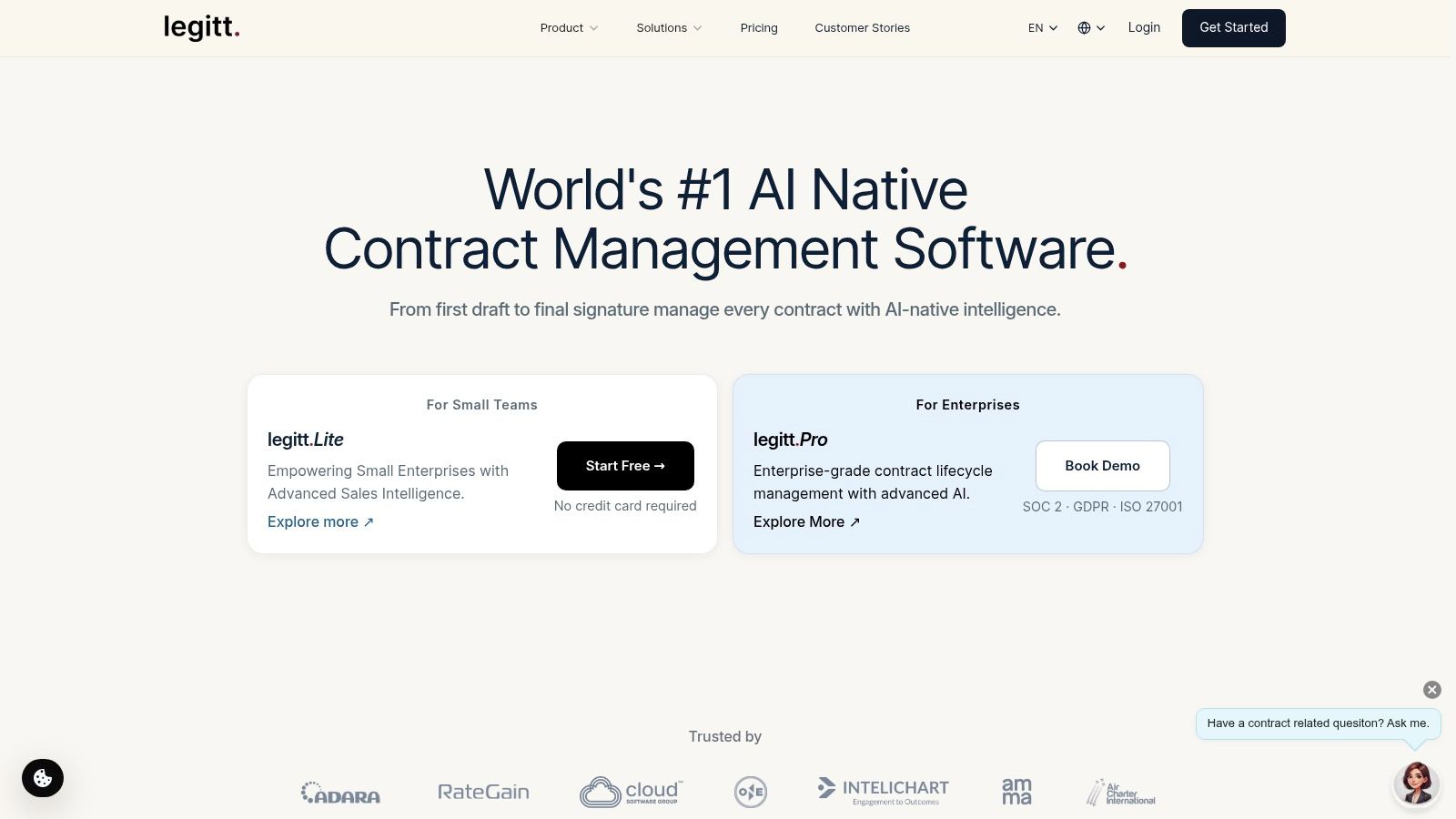
One option in this category is Legitt AI, an AI-native CLM platform that supports drafting, redlining, approval workflows, eSignature, repository management, clause extraction, deviation analysis, obligation tracking, renewal alerts, and contract intelligence in one workspace. In practice, that matters because process risk analysis is hard to sustain when drafting, review, approval, execution, and post-signature tracking all live in separate systems.
Teams evaluating this shift should focus less on feature lists and more on workflow fit. Can the platform support intake discipline, AI contract review, approval logic, searchable repository controls, and post-signature accountability in the same contract lifecycle? This is the primary operational test, and it's central to the broader case for AI in contract lifecycle management.
Good AI doesn't replace legal judgment. It removes repetitive review work so legal judgment can focus on the contracts that actually deserve it.
From Process to Profit Measuring the ROI of Risk Analysis
Risk analysis gets budget approval when it shows up in business metrics.
The clearest ROI usually appears in cycle time, control visibility, and avoided leakage. Verified benchmarks indicate that AI-assisted CLM can reduce contract cycle times by 50% to 80%, shrinking average execution duration from 3.4 weeks to under one week in organizations with high adoption rates, according to the AI contract lifecycle management benchmarks summarized here.
KPIs that matter
Track a short list of operational and financial indicators:
- Cycle time for high-risk agreements
- Volume of non-standard clause escalations
- Renewals identified within notice windows
- Obligations completed on time
- Contracts executed on approved templates
- Post-signature disputes tied to unclear terms or workflow failures
For finance and revenue operations, the strongest argument is linkage. Better contract controls reduce slowdowns, reduce preventable exceptions, and improve forecast confidence. For legal ops, the win is increased bandwidth. The team spends less time chasing status and more time on meaningful negotiation and policy work.
If you want executive support, tie the program to commercial outcomes, not just legal hygiene. That's the same logic behind linking contract management to financial performance.
If your team is still managing contract risk through inboxes, spreadsheets, and memory, it's time to formalize the process. Legitt AI gives legal, procurement, sales, and operations teams a single workspace to draft, review, approve, e-sign, store, and monitor contracts with built-in AI support for clause extraction, deviation analysis, obligations tracking, renewals, and repository-wide contract intelligence.