
You create multi-party signing flows with AI by turning your signing process into a rules-driven workflow instead of a manual email chase. AI helps you define who signs, who approves, in what order, under what conditions, and then automatically routes documents, reminds stakeholders, and enforces your policies. An AI-native contract platform like Legitt AI (www.legittai.com) can orchestrate complex signing journeys across customers, vendors, internal approvers, and executives, so you are not manually stitching together steps for every deal.
This article explains what multi-party signing really means, how AI can design and manage it, and how to implement a robust, policy-compliant flow for sales, legal, finance, and procurement.
1. What is a multi-party signing flow, really?
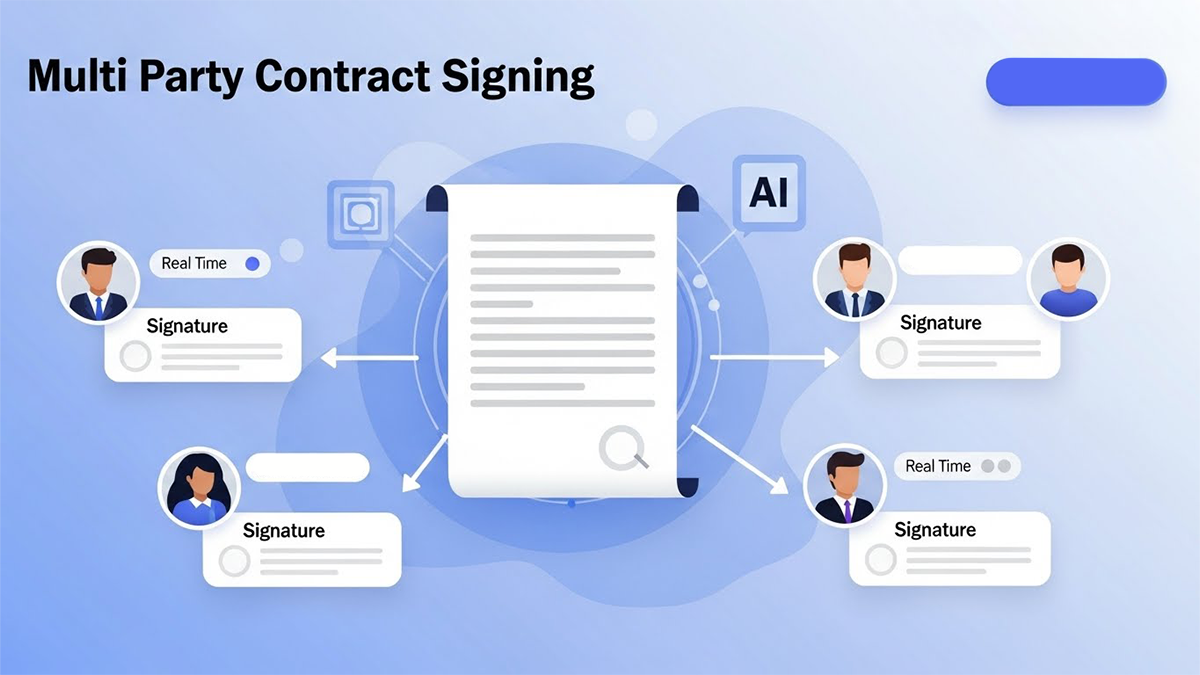
Multi-party signing is more than “several people sign the same document.” It usually means:
- Multiple organizations involved (you, customer, reseller, partners, vendors).
- Multiple roles within each organization (approvers, signers, observers, countersigners).
- A defined sequence (legal must approve before CFO, customer must sign before vendor, etc.).
- Conditional logic (extra approval only if deal value exceeds a threshold, or if a data protection addendum is included).
Examples:
- A SaaS MSA and SOW that require: internal legal approval, finance sign off, sales VP sign off, then customer legal and customer executive signature.
- A vendor contract that needs: procurement review, InfoSec approval, legal sign off, budget owner sign off, vendor signature, and then final countersignature by the COO.
Without structure, you end up with email chaos, version confusion, and missed steps. AI helps by turning this into a well defined workflow with clear roles and automated routing.
2. Why traditional multi-party signing is painful
Most organizations handle complex signing flows through combinations of:
- Informal email threads (“Can you sign this next?”).
- Chat messages reminding people to review and sign.
- Manual uploads to eSignature platforms with improvised routing rules.
- Spreadsheets or notes tracking “who has signed and who has not”.
This leads to predictable pain:
- Someone gets skipped in the approval chain.
- A signer receives the document before legal has finished reviewing.
- The wrong version is sent to the external party.
- Approvals and signatures are completed out of order.
- No clear audit trail of who approved what and when.
AI cannot fix poor governance by itself, but when combined with clear rules, it can enforce the structure you define and reduce human error. Platforms like Legitt AI (www.legittai.com) are built to encode that structure once and reuse it across deals.
3. How AI helps design multi-party signing workflows
The first step is to express your signing flow as rules, not as tribal knowledge. AI can then help you design and maintain those rules.
3.1 Capturing roles and responsibilities
You define:
- Internal roles: salesperson, deal desk, legal counsel, finance approver, business owner, C-level approver.
- External roles: customer legal contact, customer business sponsor, vendor contact, partner representative.
- Whether each is an approver (reviews but does not sign) or a signer (executes the contract).
AI assists by:
- Suggesting typical roles based on contract type (NDA vs MSA vs SOW vs order form).
- Proposing standard patterns from your existing contracts and organization charts.
- Helping you map roles to real people and fallback contacts.
3.2 Defining approval and signature sequences
You then specify sequences such as:
- Internal review and approvals must be completed before external signatures start.
- Legal and InfoSec must approve before finance, or in parallel where appropriate.
- Customer signatures must happen before your executive countersigns.
AI can infer reasonable defaults from your policies and previous deals. For example, if contracts over a certain value historically involved the CFO, AI will suggest including that step in the rules.

Click to upload or drag & drop
pdf, docx up to 5 MB
4. Adding rules, thresholds, and conditional logic
Complex flows often depend on context, not just static roles. AI-enabled workflows handle:
4.1 Value-based approvals
Examples:
- Deals under 10,000 – sales manager sign off is enough.
- Deals between 10,000 and 100,000 – require finance and legal approval.
- Deals above 100,000 – require CFO or COO approval.
AI can:
- Read the contract or CRM data to detect deal value.
- Automatically pick the right approval pattern.
- Flag exceptions when someone tries to bypass required approvers.
4.2 Risk and content-based approvals
Decisions can also depend on what the contract actually says:
- If personal data or cross-border transfers are involved – add Data Protection Officer or InfoSec.
- If liability caps are modified or unlimited liability is introduced – escalate to senior legal.
- If governing law or jurisdiction changes – require specific legal jurisdiction approval.
AI can analyze the contract content to detect such conditions and dynamically insert extra approval steps. Instead of manually remembering, “If the DPA clause changes, loop in privacy counsel,” the rule is encoded once and reused.
4.3 Role substitutions and delegations
If a specific approver is unavailable, AI can:
- Apply delegation rules (e.g., department head can substitute for manager).
- Suggest alternate approvers based on organizational hierarchy.
- Maintain consistent policy while avoiding bottlenecks.
This turns your flow from a static route into a living system that adapts without breaking compliance.
5. Orchestrating the signing journey with AI
Once rules are defined, AI can orchestrate the full journey from “ready for approval” to “fully signed”.
5.1 Automatic routing and notifications
When a draft changes status to “Ready for internal approval”:
- AI identifies required internal approvers based on contract type, value, and content.
- It routes the document to them in the correct order or parallel tracks.
- It sends notifications, tracks responses, and logs timestamps.
When internal approvals are done and the contract is “Ready for external signing”:
- AI configures signers and order in the eSignature flow.
- It attaches the correct version of the contract and associated annexes.
- It initiates the signing ceremony and monitors progress.
5.2 Signature sequencing and dependencies
AI ensures:
- External signers see the correct, finalized, approved document.
- Partially signed versions are not altered mid-process without restarting the approval cycle.
- Countersignature from your side happens only after required external signatures are complete.
For complex multi-party deals (e.g., tri-party agreements), AI can enforce rules like “Party A and B must sign before Party C countersigns” and handle multiple parallel signing flows where legally acceptable.
6. Monitoring, reminders, and AI-driven escalations
Once the signing flow is in motion, AI adds significant value in tracking and nudging it forward.
6.1 Smart reminders
Instead of fixed reminders, AI can:
- Adjust timing based on engagement (opened but not signed, never opened, partially completed).
- Use different tones or templates for internal vs external stakeholders.
- Stop or slow reminders when a human has just intervened or when there is an active negotiation thread.
6.2 Escalation logic
AI can escalate when:
- High-value deals remain unsigned close to quarter-end.
- Vendor contracts are stuck and affecting project start dates.
- Specific roles regularly delay signing.
Escalations can go to managers, deal desk, legal, or project leads, with contextual information such as “SOW for Project X has been pending customer signature for 10 days and go-live is in 5 days.”
6.3 Portfolio view
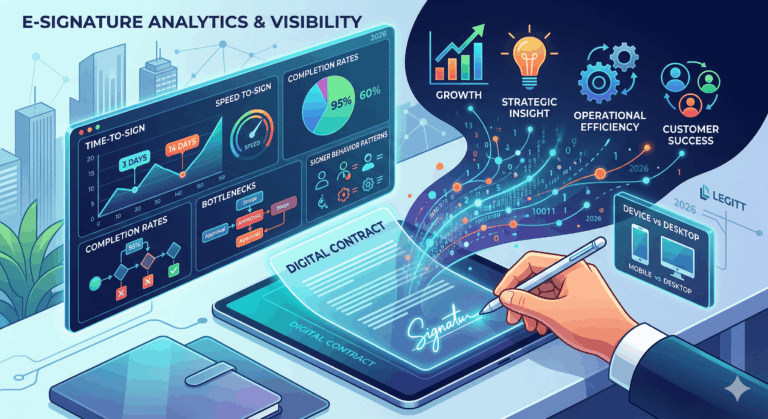
You get dashboards that show:
- All contracts currently in approval and signing flows.
- Where each contract is stuck (legal, procurement, finance, customer sign off).
- Average times per stage and per role, highlighting systemic bottlenecks.
AI can also suggest process improvements based on recurring patterns.
7. Integrating multi-party signing flows into your broader stack
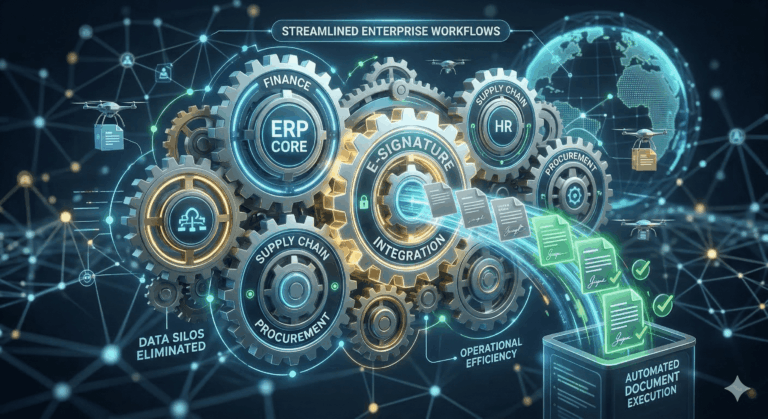
Multi-party signing should not live in isolation. AI makes the flow more powerful when integrated.
7.1 CRM and sales stack
For sales contracts:
- Opportunities in CRM can trigger contract generation and signing flows automatically.
- Deal value, products, and close dates inform rules and priorities.
- Signature status updates pipeline stages and forecast accuracy.
7.2 Procurement and vendor management
For vendor contracts:
- Purchase requests, vendor onboarding tools, and ERPs feed context into the flow.
- AI uses category, spend, and risk flags to add or skip approvers.
- Signed contracts and statuses flow back to procurement and finance systems.
7.3 CLM and repository
Finally, when fully signed:
- Contracts are automatically stored in your repository with full metadata.
- Approval and signing history is captured in a tamper-evident audit trail.
- AI can later use that data to analyze cycle times, risk positions, and compliance.
Multi-party signing then becomes part of a closed loop: from intake to drafting to approval to signature to storage to analytics.
8. Implementation roadmap: how to get started
You do not need to implement every scenario at once. A staged approach is safer and more realistic.
8.1 Start with one contract type
Pick a high volume use case, such as:
- Standard customer MSA + SOW.
- Vendor agreements for a common category.
Document your current approval and signing process for that use case: who is involved, in what order, with what thresholds.
8.2 Encode rules and configure AI workflows
In your AI-native contract platform:
- Define roles, approvers, and signers.
- Add thresholds for value and risk-based approvals.
- Configure signing order, reminders, and escalation rules.
Test with internal users and a few real deals, refine based on feedback.
8.3 Scale to more contract types and teams
Once the first pattern is stable:
- Extend to other contract types (NDAs, order forms, amendments, DPAs).
- Introduce more advanced conditional logic (region, data categories, clause deviations).
- Integrate deeply with CRM, ERP, procurement, and eSign systems.
Over time, AI becomes the orchestration engine for all multi-party signing, not just a convenience add-on.
Read our complete guide on Contract Lifecycle Management.
FAQs
Do I have to redesign all my approval processes to use AI for multi-party signing?
You do not have to start from zero, but you do need to make your approval processes explicit. AI works best when it has clear rules about who approves and signs under what conditions. A practical approach is to document existing practice for a few key contract types, then encode those rules into the AI workflow. Over time, you can refine and simplify them based on data rather than intuition.
How does AI know which approvers and signers to include for a specific contract?
AI uses a combination of contract metadata (type, value, region, risk profile) and your configured rules. For example, a services contract above a certain threshold might automatically require legal, finance, and a business sponsor, while a small NDA may only need a manager and customer signer. The system can also look at content, such as whether personal data is involved, to add specialist reviewers like InfoSec or privacy.
Can AI support tri-party or more complex agreements involving multiple organizations?
Yes. Multi-party flows can be defined to include more than two organizations, each with their own signers and sequence. AI helps by enforcing correct order - for example, certain parties sign first, another countersigns last - and by tracking progress across all participants. It also ensures the same finalized document is presented consistently to each party and that any late-stage changes trigger a controlled re-approval cycle.
What happens if someone needs to change the contract after internal approvals have started?
In a controlled AI workflow, any substantive change after approval moves the contract back to a review state. AI detects text changes or clause modifications and can require re-approval by relevant stakeholders before the process proceeds. This prevents quiet edits from slipping through after people think they are signing the final agreed terms. Minor formatting fixes can be handled with lighter rules, depending on your governance settings.
How does AI handle parallel approvals versus sequential ones?
You can configure which steps can run in parallel and which must be sequential. For instance, legal and InfoSec reviews might happen in parallel, but finance approval might wait until both are done. AI keeps track of which approvals are outstanding and only moves to the next stage when all parallel tasks are complete. This shortens cycle times where possible, while still honoring dependencies you define.
Can AI-generated reminders and escalations be customized for different roles?
Yes. Reminder timing, frequency, and content can be tailored to internal approvers, external signers, and senior executives. For example, an internal manager might receive operational reminders, while a C-level signer might receive a concise summary linked to business impact and deadlines. Escalations can also be routed differently depending on the role and importance of the contract.
How do we avoid over-automation and maintain human judgment where needed?
The key is to decide which contracts and scenarios are eligible for full automation and which require manual checkpoints. High-value, high-risk, or strategically sensitive contracts can be configured to always require human review at certain stages. AI can still prepare information, highlight issues, and suggest routes, but final decisions remain with people. For lower-risk documents, you can allow AI workflows to run more autonomously within defined guardrails.
Is it safe to rely on AI for enforcing who can sign what?
It is safe if you design the system with clear roles, permissions, and audit trails. AI is not replacing security controls; it is automating their application. All routing decisions, approvals, and signatures should be logged and traceable. You can also require that certain changes to approver or signer lists themselves be approved. Combined with strong authentication and eSignature technology, this significantly reduces the risk of unauthorized signing.
How does this integrate with our existing eSignature and contract tools?
Most AI-native workflows are designed to integrate with popular eSignature platforms and contract lifecycle tools. The AI layer determines the flow - who signs and when - and passes that configuration to the eSignature engine, which handles the cryptographic signing. Status updates flow back into the AI layer and your CLM or CRM, so everyone sees a unified view of progress. This allows you to preserve existing investments while adding intelligence on top.
What is the simplest way to start building AI-driven multi-party signing flows?
Start small. Choose one contract type with a recurring pattern, such as customer MSAs or vendor agreements in a specific category. Map out current approvals and signers, then encode that flow into your AI workflow tool. Run a few live contracts through the system, compare performance with your old process, and refine the rules. Once you are confident, extend the approach to additional contract types and business units, gradually standardizing multi-party signing across your organization.