
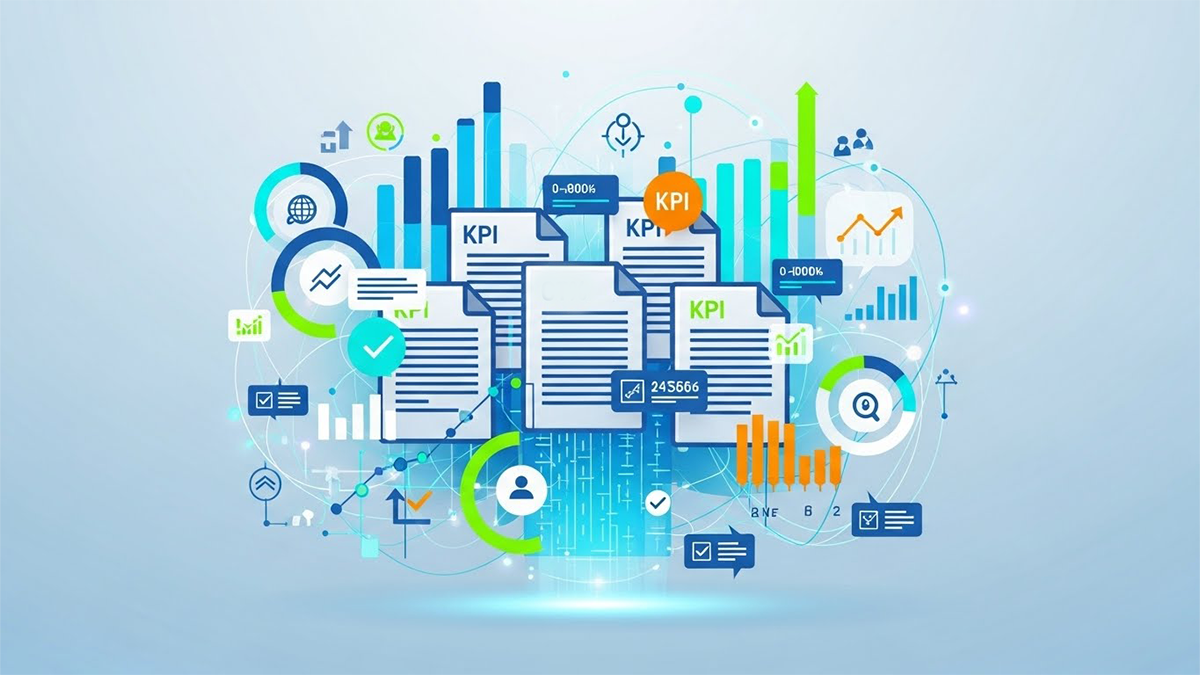
For most organizations, contracts define how value is created, delivered, and protected-but the KPIs inside those contracts are rarely monitored with discipline. Renewal dates, SLAs, uptime commitments, response times, volume thresholds, rebates, and escalation rules often sit buried in PDFs and long-form documents. The result is predictable: revenue leakage, missed obligations, operational firefighting, and a constant disconnect between what was agreed and what is actually delivered.
AI is changing this paradigm. Instead of treating contracts as static, post-signature artifacts, AI-native platforms such as Legitt AI (www.legittai.com) can transform contracts into live KPI frameworks that continuously guide operations, finance, and customer success. This article explores how AI can manage contract KPIs to drive real operational efficiency, structured around key business questions-followed by 10 detailed FAQs.
1. What exactly are contract KPIs and why do they matter for operations?
Contract KPIs are the measurable obligations, thresholds, and performance targets embedded in agreements with customers, vendors, and partners. They include commercial metrics (minimum spend, discount tiers, usage thresholds), service metrics (response and resolution times, uptime, quality levels), and governance metrics (reporting cadence, audit rights, compliance standards). These KPIs are not “nice-to-have” metrics-they define how value flows and how risk is controlled in real-world operations.
When contract KPIs are not systematically monitored, organizations fall into a gap between promise and performance. Sales promises may not align with delivery capacity, vendor performance may drift below contractual commitments, and finance may miss opportunities to increase or preserve revenue. Conversely, when contract KPIs are actively managed, they become a powerful operational compass: teams know what matters, by when, and for whom, and can align day-to-day actions with legally binding commitments.
2. How are contract KPIs typically tracked today-and what are the limitations?
In many companies, contract KPI tracking is still largely manual. Key terms are copied into spreadsheets, ticketing systems, or internal trackers; renewal dates are handled with calendar reminders; and SLA breaches are identified retroactively after escalations or customer complaints. Data lives in disconnected silos-legal repositories, CRM notes, emails, and local files-making reliable reporting difficult.
The limitations are significant:
- Fragmentation: No single source of truth connects contract terms to operational data.
- Latency: KPI deviations are often detected weeks or months after they occur.
- Inconsistency: Different teams interpret KPIs differently or maintain their own trackers.
- Scalability issues: As contract volume grows, manual KPI tracking becomes impossible to sustain.
In this environment, operations and legal teams are constantly reacting to issues rather than proactively managing performance. AI addresses these limitations by automating extraction, mapping, monitoring, and alerting at scale.
3. How can AI turn unstructured contracts into structured KPI data?
The first challenge in managing contract KPIs is visibility: knowing what KPIs exist, where they sit, and how they are defined. AI can read contracts-whether Word, PDF, or scanned documents-and extract key KPI elements such as timeframes, thresholds, penalties, rewards, and conditions. This process involves natural language understanding, clause classification, and entity extraction.
AI-driven platforms can then:
- Normalize KPI fields across contracts (e.g., standardizing how “response time” or “uptime” is represented).
- Map clauses to data models, such as “SLA_KPI: RESPONSE_TIME_4H” or “COMMERCIAL_KPI: MINIMUM_COMMIT_1M.”
- Tag exceptions and non-standard terms, making it clear which contracts deviate from policy.
Once contracts are converted into structured KPI data, they can be integrated with CRM, ERP, service management systems, and data warehouses. This is where AI-native solutions like Legitt AI start to differentiate themselves-by treating contracts as live data objects rather than static files locked away in a repository.
4. In what ways can AI monitor contract KPIs in real time and trigger operational actions?
Managing contract KPIs is not just about extraction; it is about continuous monitoring and timely intervention. AI can sit on top of integrated data streams-support tickets, uptime logs, usage metrics, billing records-and compare real-time performance against contracted KPIs.
Key capabilities include:
- Automated SLA tracking: AI correlates ticket timestamps and resolution data with contractual response and resolution commitments, detecting potential or actual breaches.
- Usage and volume monitoring: AI compares actual usage against thresholds for overage billing, rebates, or tier changes, surfacing commercial opportunities or risks.
- Renewal and notice period alerts: AI tracks renewal dates and notice periods, ensuring stakeholders are alerted early enough to renegotiate, adjust scope, or terminate.
- Penalty and credit calculations: When breaches occur, AI can calculate contractual credits or penalties and pass them to finance or account teams.
Instead of relying on manual checks, AI-enabled monitoring creates a near real-time “control tower” for contract execution. Operational leaders gain a proactive view: which KPIs are at risk, which accounts require attention, and which vendors are underperforming.
5. How does AI link contract KPIs with CRM, ERP, and service delivery systems?
Contract KPIs only become operationally meaningful when connected to the systems that execute and measure performance. AI helps integrate contract data with CRM (e.g., Salesforce, HubSpot), ERP (e.g., SAP, Oracle, NetSuite), ITSM tools (e.g., ServiceNow, Jira Service Management), and data platforms.
This integration allows:
- Single source of truth: Account managers can see contractual KPIs, current performance status, and risk indicators directly within the CRM.
- Closed-loop billing: Commercial terms such as volume tiers, usage-based pricing, and discount logic are synchronized with billing and invoicing systems.
- Service-level dashboards: Operations teams see SLA adherence, trends, and hotspots mapped against specific contracts and customers.
- Executive reporting: Finance and leadership teams receive portfolio-level views: which contracts are at highest risk of churn, where margin is eroding, and where performance is exceeding commitments.
Platforms like Legitt AI are designed to sit at the center of this ecosystem, turning contracts into a data backbone that feeds and harmonizes multiple enterprise systems for more reliable KPI management.
6. Can AI predict KPI breaches and help prevent revenue and compliance risks?
Beyond real-time monitoring, AI can be used to predict future KPI breaches and surface emerging risks before they become incidents. By combining contract data with historical operational performance, customer behavior, and external factors, AI models can identify patterns that correlate with SLA failures, churn, or financial disputes.
Practical examples include:
- Early-warning signals: A rise in ticket volume, slower response times, or sudden usage spikes can trigger “at-risk” alerts for specific accounts or services.
- Churn and renewal risk scores: AI can assign risk scores based on unmet KPIs, negative trends, or repeated escalations, prompting proactive engagement from customer success teams.
- Compliance exposure: For regulated industries, AI can highlight where data processing, security, or reporting commitments may not be met, enabling early remediation.
- Revenue leakage detection: AI flags discrepancies between contractual entitlements and billing-such as under-billed usage or missing price uplifts at renewal.
By shifting from reactive KPI reporting to predictive risk management, AI allows organizations to protect revenue, reduce disputes, and maintain stronger customer relationships.
7. What governance and controls are needed for AI-managed contract KPIs?
As AI takes a larger role in managing contract KPIs, governance becomes critical. Organizations must ensure that AI-powered processes are accurate, auditable, and aligned with internal policies and regulatory requirements.
Key governance elements include:
- Clear ownership: Legal, operations, finance, and IT should jointly define how KPIs are modelled, monitored, and escalated.
- Validation and QA: AI extraction and classification must be periodically validated against human-reviewed samples to ensure accuracy.
- Policy alignment: KPI definitions, thresholds, and escalation paths should be anchored in standardized playbooks and contracting policies.
- Auditability: Every automated decision, alert, and calculation should be traceable-with logs that show which data and rules were applied.
- Data protection: Contract and performance data must be secured, with access controls and encryption aligned to corporate and legal requirements.
Legitt AI and similar AI-native platforms typically incorporate these governance features, enabling organizations to trust AI outputs while retaining human oversight and decision-making authority.
8. How should organizations get started with AI for contract KPI management?
The most effective path is to start small but strategic. Organizations should identify a high-impact area-such as customer SLAs, vendor performance, or renewal management-and pilot AI-driven KPI management there first.
A practical roadmap often looks like this:
- Inventory and prioritize contracts for the chosen area (for example, top 100 customer contracts by revenue).
- Use AI to extract and structure KPIs from those contracts into a consistent data model.
- Integrate KPI data with operational systems (CRM, service tools, or ERP) relevant to that domain.
- Configure monitoring and alerting for key events-breaches, thresholds, or upcoming renewals.
- Measure impact in terms of reduced escalations, better SLA adherence, improved renewal outcomes, or reduced revenue leakage.
- Scale iteratively to broader contract portfolios, additional KPI categories, and more advanced predictive models.
By following this approach and leveraging AI-native platforms like Legitt AI, organizations can move from proof-of-concept to enterprise-scale contract KPI management in a controlled and value-driven way.
Read our complete guide on Contract Lifecycle Management.
FAQs
How accurate is AI when extracting KPIs from complex contracts?
Modern AI models can achieve high accuracy in identifying clauses and extracting KPI-related data such as timeframes, thresholds, and metrics, especially when trained or configured with domain-specific examples. However, they are not flawless. Best practice is to combine AI with human review, particularly for high-value or high-risk contracts. Over time, as AI learns from corrections, accuracy improves further, reducing the need for manual intervention.
Can AI handle industry-specific KPIs, such as in healthcare, finance, or manufacturing?
Yes, AI can be tailored to recognize industry-specific language, regulatory requirements, and performance measures. This often involves building specialized extraction models or rule sets that understand domain terminology and clause patterns. For example, healthcare contracts may focus on HIPAA-related obligations, while manufacturing emphasizes quality and delivery KPIs. With appropriate configuration and training, AI can become highly effective in these specialized environments.
How does AI-based KPI management integrate with existing tools and workflows?
AI-based contract platforms are typically designed with robust integration capabilities, using APIs, webhooks, and connectors to link with CRM, ERP, ticketing, and data platforms. Once contract KPIs are extracted and structured, they can be synchronized with these systems to enable dashboards, alerts, and automated workflows. The goal is not to replace existing tools but to make them smarter by feeding them reliable, contract-derived KPI data.
What kind of operational improvements can we realistically expect?
Organizations that systematically manage contract KPIs with AI commonly see reductions in SLA breaches, fewer unplanned escalations, and improved renewal outcomes. Finance teams may detect and recover revenue leakage, such as under-billed usage or missed indexation increases. Vendor management can be strengthened through objective performance tracking and accountability. Over time, these improvements translate into higher margins, better customer satisfaction, and more predictable operations.
Is AI-based KPI management suitable only for large enterprises?
While large enterprises with complex contract portfolios gain significant value, mid-sized organizations can also benefit from AI-based KPI management. Even a few hundred key contracts can represent substantial revenue, risk, and operational obligation. AI helps lean teams manage these commitments without hiring disproportionately large legal or operations staff. Platforms like Legitt AI (www.legittai.com) are often designed to scale both up and down, making them accessible beyond just global enterprises.
How do we ensure that AI recommendations do not conflict with our legal or compliance policies?
AI should operate within clearly defined guardrails. Legal and compliance teams can define standard clause libraries, KPI definitions, escalation rules, and unacceptable positions. AI then uses these as reference points: it flags deviations, proposes compliant alternatives, and highlights potential conflicts. Human decision-makers remain responsible for final approvals, ensuring that AI speeds up execution without compromising policy alignment or regulatory adherence.
AI should operate within clearly defined guardrails. Legal and compliance teams can define standard clause libraries, KPI definitions, escalation rules, and unacceptable positions. AI then uses these as reference points: it flags deviations, proposes compliant alternatives, and highlights potential conflicts. Human decision-makers remain responsible for final approvals, ensuring that AI speeds up execution without compromising policy alignment or regulatory adherence.
Contracts often contain sensitive information about pricing, customers, partners, and internal operations. Any AI solution must therefore implement strong data protection measures, including encryption, strict access controls, tenant isolation, and compliance with relevant privacy laws. Organizations should evaluate how vendors handle data storage, processing, and model training, ensuring that contractual and regulatory obligations are respected at all times.
How long does it typically take to deploy an AI-based contract KPI solution?
Deployment timelines vary based on complexity, but many organizations can launch an initial use case in a few weeks to a few months. Early phases focus on connecting data sources, extracting KPIs from a curated set of contracts, and configuring dashboards and alerts. As teams gain confidence, they expand coverage and fine-tune models. A phased approach-starting with a narrow but impactful scope-helps manage change and demonstrate early business value.
What internal resources and skills are needed to support AI-managed KPIs long term?
Long-term success typically requires a cross-functional core team: legal or contracts specialists, operations or service leaders, finance or revenue operations, and IT or data teams. They collaborate to define KPI models, govern data quality, and interpret insights. Organizations do not need deep AI expertise internally if they work with mature platforms, but they do need business owners who understand contracts and operations and can translate insights into action.
How does an AI-native platform like Legitt AI differ from adding AI plugins to a legacy CLM?
Adding AI plugins to an existing CLM often results in isolated point features-like basic extraction or search-without truly transforming how KPIs are managed. An AI-native platform such as Legitt AI is architected from the ground up around data, intelligence, and automation. It treats every contract as a structured, queryable object, connects deeply with operational systems, and continuously learns from usage. This enables a more holistic and scalable approach to contract KPI management and operational efficiency than bolt-on AI capabilities can provide.