
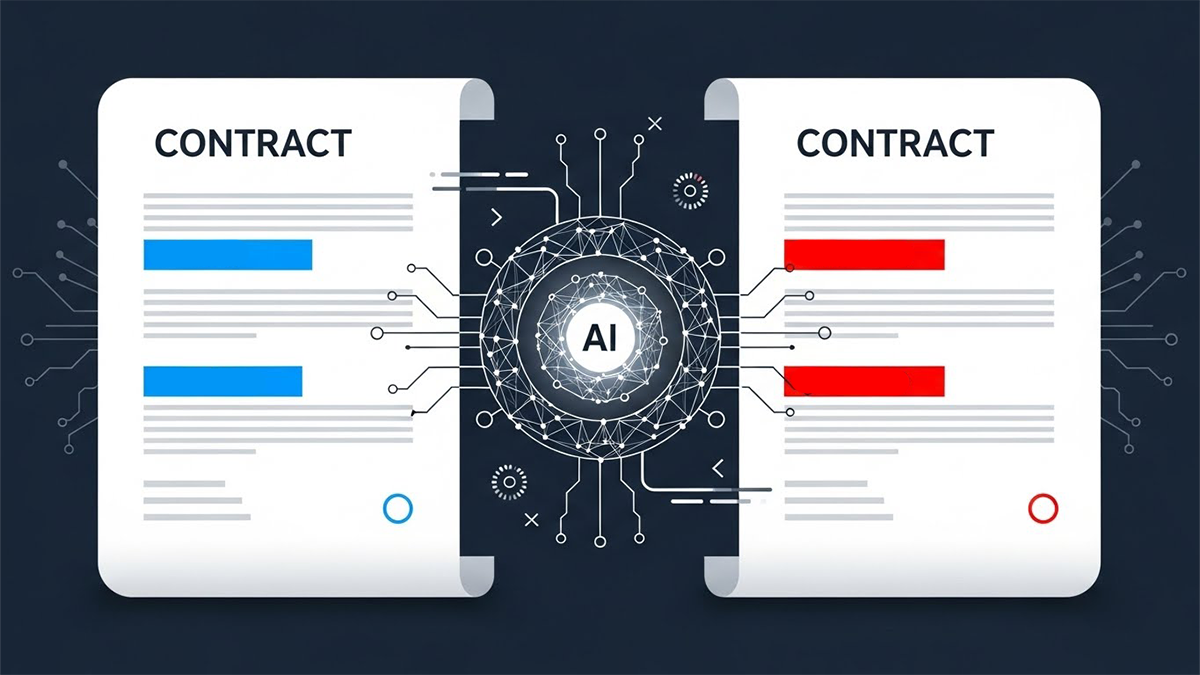
In most organizations, contracts grow organically over years – negotiated templates, local variants, one-off exceptions, and legacy forms from acquisitions. Over time, this creates a dense forest of clauses that is hard to navigate, let alone standardize. Duplicate clauses, conflicting provisions, and silent contradictions between documents become almost inevitable when hundreds or thousands of contracts are in play.
This complexity is exactly where AI can add material value. Modern AI systems can read, compare, and categorize clause language at a scale that is impossible for human teams. Instead of relying solely on manual line-by-line review, organizations can use AI to automatically surface duplicates, inconsistencies, and conflicts before they turn into disputes, compliance issues, or revenue leakage. AI-native platforms like Legitt AI (www.legittai.com) are designed specifically to bring this level of intelligence into day-to-day contract operations.
1. What do duplicate and conflicting clauses actually look like in real contracts?
Duplicate clauses are not always obvious copy-paste repetitions. Sometimes two clauses say effectively the same thing with slightly different wording. In other cases, a master agreement includes a provision, and an attached schedule quietly repeats or modifies it without clear hierarchy language. These overlaps clutter documents and make it harder to know which text is operative.
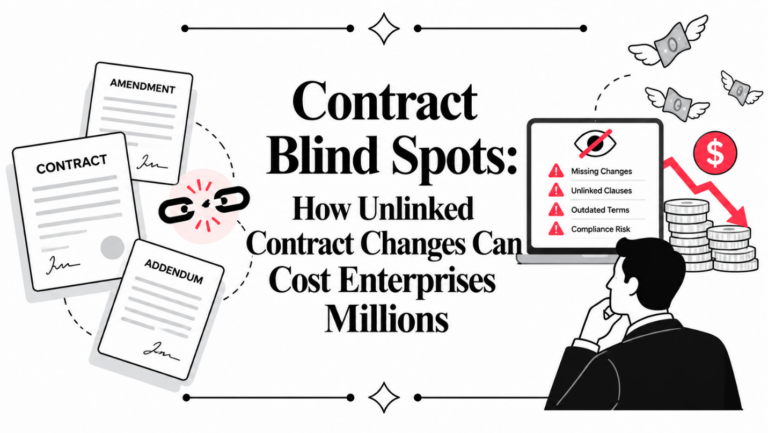
Conflicting clauses are even more dangerous. For example, the limitation of liability in a main agreement might cap exposure at 12 months of fees, while a later schedule or addendum includes uncapped liability for a particular service. Termination rights, service levels, IP ownership, and data protection terms are frequent locations for subtle contradictions. Without systematic detection, these conflicts are often discovered only when a dispute or audit occurs – at which point they are expensive and reputationally damaging.
2. Why are duplicate and conflicting clauses such a risk for organizations?
On the surface, duplicated or overlapping clauses may appear harmless, but they introduce ambiguity into the agreement. If two provisions cover the same subject with slightly different language, counterparties may argue over interpretation, and courts may need to determine which applies. This weakens the organization’s contractual position and increases litigation risk.
Conflicting clauses are a more direct hazard. They can undermine carefully negotiated risk allocations, expose the business to unintended liability, or break alignment with internal policy and regulatory obligations. For example, conflicting data processing clauses can create privacy non-compliance, while inconsistent termination or renewal terms can cause revenue forecasting errors. From an operational perspective, these inconsistencies also confuse sales, delivery, and finance teams that rely on clear contractual guidance.
3. How does AI detect duplicate or near-duplicate clauses at scale?
Traditional search tools can only detect duplicates when the wording is identical. AI, by contrast, can use semantic understanding to detect clauses that convey the same meaning with different phrasing. Large language models and clause-classification algorithms read the full context of a provision, identify its legal function, and group similar clauses into conceptual families.
In practice, this means AI can:
- Cluster clauses that handle the same topic – for example, different versions of limitation of liability or confidentiality.
- Identify when multiple clauses in the same contract or across templates are functionally equivalent.
- Surface near-duplicates that differ only in minor phrasing or formatting.
- Map each clause to a standardized concept in a clause library so teams can see where true diversity is needed and where it is accidental.
When implemented as part of an AI-native platform like Legitt AI, these capabilities allow legal and operations teams to rationalize clause inventories, reduce unnecessary variation, and simplify the contracting landscape.
4. How can AI identify conflicting or inconsistent clauses that humans might miss?
Conflict detection is more complex than duplication detection because it requires understanding interaction, not just similarity. AI models can be trained to recognize logical relationships between clauses – for example, whether one clause narrows, expands, or contradicts another. They can also be instructed to analyze cross-references, defined terms, and document hierarchy.
AI can help in several ways:
- Comparing clauses that govern the same topic but impose different standards, such as two different service levels in separate sections.
- Detecting inconsistencies between master agreements, schedules, and addenda, including conflicts in governing law, liability caps, or indemnity scope.
- Highlighting misalignment between a contract and the organization’s approved clause library or policy baseline.
- Flagging potential contradictions between related contracts, such as a master services agreement and a separate data processing agreement for the same customer.
This does not remove the need for human judgment. Instead, AI acts as a high-speed screening engine, focusing legal review on the most problematic areas and dramatically reducing the chance that conflicts will slip through unnoticed.
5. How does AI support clause libraries and standardization efforts?
Clause libraries are only powerful if they are actively used and enforced. In practice, many organizations create libraries but struggle to keep them synchronized with actual drafting and negotiation. AI helps close this gap by continuously mapping live contracts against the standard library and showing where deviations occur.
AI-driven platforms can:
- Classify every clause in an agreement against the closest standard clause or variant in the library.
- Show which clauses are non-standard, how often they appear, and in what context.
- Recommend replacement of non-standard clauses with approved language during drafting or review.
- Provide analytics on clause usage trends, such as which fallback positions are most commonly accepted or rejected.
Legitt AI is designed to treat the clause library as a living asset – not just a static reference – by embedding it into drafting, negotiation, and review workflows. This enables consistent risk management and reduces the proliferation of conflicting or unnecessary clause variants across the portfolio.
6. How can AI-driven detection be integrated into day-to-day contract workflows?
To create real value, AI clause detection must be embedded directly into the tools and processes people already use. If AI insights live in a separate environment that requires manual file uploads, adoption will be low and impact limited. The most effective deployments integrate AI into authoring tools, CLM systems, and document management platforms.
Typical integration points include:
- During drafting – AI evaluates emerging clauses in real time, flags duplicates and conflicts, and suggests approved alternatives.
- During intake of third party paper – AI scans incoming documents, compares them to internal standards, and highlights conflicting or high risk provisions.
- During playbook guided negotiation – AI supports legal and commercial teams with automated redline suggestions and risk scoring.
- During repository clean up – AI reviews existing executed contracts to detect systemic duplicates and conflicts that need remediation.
By implementing this as part of a unified AI-native solution such as Legitt AI (www.legittai.com), organizations ensure that clause conflict detection is not a one time project but a continuous capability.
7. What governance and controls are needed around AI based clause review?
Because AI touches legal risk, governance is essential. Organizations must treat AI as a powerful assistant rather than an autonomous decision maker. Clear policies, validation processes, and accountability structures are required to ensure that clause detection outputs are reliable and aligned with corporate risk appetite.
Key governance practices include:
- Defining ownership of the clause library, risk thresholds, and escalation paths.
- Regularly validating AI outputs against human reviewed samples and updating models or rules where necessary.
- Establishing audit logs that record which clauses were flagged, how they were resolved, and who approved any changes.
- Limiting automatic changes so that AI recommendations are suggestions, not silent modifications.
- Providing training for legal and commercial users so they understand AI strengths and limitations.
With these controls in place, AI becomes a trusted part of the legal operations toolkit, enhancing consistency without compromising professional responsibility.
8. How should organizations start using AI to detect duplicate and conflicting clauses?
The most effective starting point is to focus on a core set of high impact contract types and risk areas. For many organizations, this will include NDAs, MSAs, data processing agreements, and key revenue generating contracts. The goal is to show tangible risk reduction and efficiency gains on a manageable scope before scaling.
A practical approach might include:
- Selecting a subset of existing contracts and using AI to map and cluster the clauses.
- Identifying the most frequent duplicates, conflicts, and non-standard variations.
- Cleaning up and sharpening the clause library, including clear preferred and fallback positions.
- Integrating AI review into drafting and intake workflows for those contract types.
- Measuring impact in terms of reduced review time, fewer escalations, and clearer risk positions.
- Gradually expanding coverage to more contract categories and jurisdictions.
By working iteratively and partnering with a mature AI contracting platform like Legitt AI, organizations can build a robust clause detection capability that scales with their portfolio and improves continuously.