
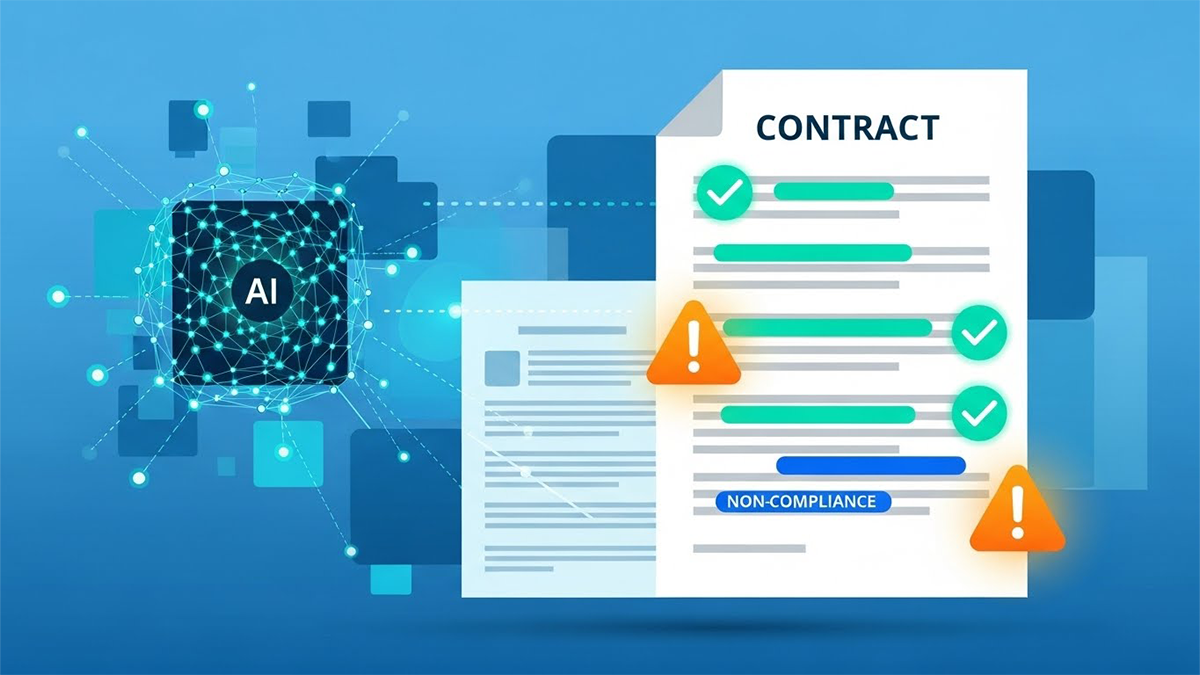
Every organization has contract drafting standards. The problem is that those standards often exist in the heads of experienced lawyers, in guidance documents nobody reads, or in template libraries that are not consistently used. When a new contract is drafted, whether it meets the organization’s standards depends on who is drafting it and how carefully they apply guidelines that may not be explicitly enforced.
Policy-compliant contract drafting changes this. Instead of relying on individual drafter knowledge and discipline, compliance with drafting standards is enforced by the system – automatically, on every contract, regardless of who creates it.
This guide covers what drafting policy compliance means in practice, how AI enforces it, and what the governance model looks like for organizations building a policy-compliant drafting environment.
What Drafting Policy Compliance Actually Means
Drafting policy compliance is not just about using approved templates. It encompasses five distinct standards that apply to every contract generated in or reviewed by the organization.
Required provision compliance. Specific contract categories must include specific provisions. A software license must include an acceptable use policy. A vendor contract must include a data processing agreement for vendors handling personal data. A professional services agreement must include IP ownership provisions. Policy-compliant drafting ensures these required provisions are present before the contract is finalized.
Prohibited language elimination. Some language is categorically prohibited – either because it creates unacceptable legal exposure or because it violates regulatory requirements. Unlimited liability acceptance in specific contract categories. Specific data transfer mechanisms that do not meet current regulatory standards. Waiver of jury trial clauses in jurisdictions where they are unenforceable. Policy-compliant drafting flags and prevents prohibited language from appearing in final contracts.
Standard position adherence. For negotiable clause types, the organization has approved positions – the language it uses as its starting point and the range of alternatives it will accept. Policy-compliant drafting starts from approved standard positions rather than drafters inventing language from scratch or reusing language from past contracts without verification.
Regulatory requirement alignment. Contracts must reflect current regulatory requirements, which change over time. A data processing agreement must include current GDPR-required provisions. An employment contract must reflect current jurisdiction-specific requirements. Policy-compliant drafting checks contracts against current regulatory standards, not just organizational preferences.
Formatting and structural compliance. Less critical than substantive compliance but still relevant for contracts that will be reviewed by regulators, submitted in litigation, or reviewed by counterparties’ legal teams: consistent use of defined terms, appropriate section numbering, required recitals, and accurate signature blocks.
How AI Enforces Drafting Standards
At the Generation Stage
When a contract is generated from a template or clause library, AI enforcement of drafting standards operates in the background without requiring the drafter to actively check compliance. The generation process:
- Selects the appropriate template for the contract type
- Populates the template with data from the relevant system (CRM data for customer contracts, procurement system data for vendor contracts)
- Selects clause library entries appropriate for the contract context
- Runs an automated compliance check verifying that all required provisions are present
- Flags any prohibited language that may have been introduced through customization
- Confirms that all clause selections reflect current approved positions
The output is a draft that is policy-compliant before any human reviews it. The drafter’s role is to verify the generated contract meets the specific needs of the deal, not to check whether it meets organizational standards – the system has already done that.
For how the clause library underpins this process, see AI-powered clause libraries: building reusable contract intelligence.
At the Review Stage
For contracts received from counterparties – inbound contracts on the counterparty’s paper – AI review checks compliance with drafting policies by comparing the counterparty’s language against the organization’s required provisions and prohibited language rules.
The review output identifies:
- Required provisions that are absent from the counterparty’s contract (must be added through negotiation)
- Counterparty language that contains prohibited provisions (must be removed or replaced)
- Counterparty positions that fall outside the organization’s acceptable range (flagged for negotiation with the approved alternative language)
This review-stage compliance check ensures that contracts accepted from counterparties meet the same policy standards as internally generated contracts – preventing the common pattern where rigorous standards are applied to outbound contracts but inbound contracts are accepted with inadequate scrutiny.
At the Modification Stage
Contracts are frequently modified during negotiation. Each modification is an opportunity for non-compliant language to enter the agreement. AI compliance checking at the modification stage reviews each change to the contract draft and flags modifications that introduce compliance issues:
- A change that removes a required provision
- A change that adds prohibited language
- A change that moves a clause outside the acceptable range
- A change that introduces an inconsistency with another provision
Modification-stage compliance checking prevents the common pattern where a contract starts compliant and drifts out of compliance through rounds of negotiation where each change seems minor but the cumulative effect is significant.
Building the Drafting Policy Framework
A policy-compliant drafting environment requires an explicit, documented policy framework – the standards the AI will enforce. This framework has four components.
The required provisions matrix. For each contract type, which clause types must be present? This matrix documents the minimum required content for each contract category. It is the reference document for the “required provision presence” compliance check.
The prohibited language library. What language is categorically prohibited? This library documents specific formulations, clause structures, or provisions that cannot appear in contracts regardless of deal context. It is the reference document for the “prohibited language” compliance check.
The standard positions playbook. For negotiable clause types, what are the acceptable positions? This playbook documents the preferred position, the acceptable range, and the non-negotiable floor for each clause type in scope. It is the reference document for the “standard position adherence” compliance check.
The regulatory compliance checklist. For each regulatory framework that applies to the organization’s contracts, what specific provisions must contracts include? This checklist is maintained by legal and updated when regulatory requirements change. It is the reference document for the “regulatory requirement alignment” compliance check.
These four documents together constitute the drafting policy. The AI enforces the policy; the documents define what the policy is. Without clear, documented policy documents, the AI has nothing to enforce – it is the documentation, not the technology, that makes policy-compliant drafting possible.
Who Owns Drafting Policy and How It Is Maintained
Ownership. Drafting policy is owned by the legal function – specifically by whoever has authority to set the organization’s contractual risk standards. In most organizations, this is the general counsel or a designated senior contracts manager. Policy ownership comes with accountability for keeping the policy current.
Maintenance triggers. Drafting policy needs to be reviewed and potentially updated when:
- Regulatory requirements change (a new data privacy law, a significant regulatory ruling)
- The organization’s risk appetite changes (a new executive team, a significant loss experience, an insurance requirement change)
- Business activities change (entering a new market, adding a new product category, changing customer or vendor profiles)
- Recurring compliance failures indicate the policy is not aligned with practical reality
Version control. Policy documents should be version-controlled with effective dates. When a policy change is made, the previous version is retained. Contracts signed under previous policy versions are governed by the policy in effect at the time of signing – version history is necessary to determine what applied when.
Communication. When drafting policy changes, the change should be communicated to all teams who draft or review contracts. A policy that is updated but not communicated will be ignored by the people it is meant to guide.
Common Compliance Gaps in Contract Drafting
Even organizations with documented policies experience consistent gaps in policy-compliant drafting. The most common:
The legacy template problem. Teams use contracts from previous deals as starting points rather than current templates. The older contract may reflect outdated policy positions or pre-regulatory-change language. AI compliance checking catches this by checking the final draft against current policy regardless of what template it started from.
The “small deal” exception. Below a certain deal value, compliance checks are skipped because the legal risk seems low. This exception creates a category of contracts that are systematically under-reviewed – and that collectively may represent significant exposure.
The jurisdiction gap. Policy frameworks are often developed for the organization’s home jurisdiction and applied globally without jurisdiction-specific adaptation. AI compliance checking with jurisdiction-specific rules addresses this.
The amendment compliance failure. Original contracts are drafted to standard – amendments are drafted in a hurry without the same compliance rigor. The final contract, as amended, may be non-compliant even if the original was not.
Summary
Policy-compliant contract drafting replaces dependence on individual drafter knowledge and discipline with systematic enforcement of documented standards. AI enforces compliance at the generation, review, and modification stages – checking that required provisions are present, prohibited language is absent, standard positions are reflected, and regulatory requirements are met.
The technology enforces the policy. Building the policy – the required provisions matrix, the prohibited language library, the positions playbook, the regulatory compliance checklist – is the work that makes the enforcement meaningful.
Related reading in this cluster:
- Contract automation with control and compliance
- Improving compliance with AI-driven monitoring
- Role of AI in monitoring contractual obligations
- How AI maintains regulatory compliance for sensitive data
Related reading from other clusters:
FAQs
Can non-legal business users safely draft contracts in Legitt AI without breaking policy?
Yes – that is one of the core benefits. In Legitt AI (www.legittai.com), non-legal users work inside guardrails defined by your legal and risk teams. They choose contract types and answer business questions rather than editing legal language line by line. The system pulls in the right templates and clauses, and prevents or flags risky changes. Legal still oversees the standards and handles exceptions, but day-to-day drafting becomes safer and more scalable.
How often do we need to update policies and clause libraries inside Legitt AI?
The update frequency depends on how dynamic your regulatory environment and internal risk appetite are, but most organizations revisit core clauses and templates at least annually, and more often when laws or business models change. Legitt AI (www.legittai.com) makes updates easier because you only need to update the template or clause library once; new drafts automatically use the latest versions. You can also track which contracts still rely on older versions, helping you plan remediation at renewal.
Can Legitt AI support different policies for different regions, entities, or business lines?
Yes. Legitt AI (www.legittai.com) supports segmentation by geography, legal entity, product line, and other attributes. You can maintain separate templates, clauses, and rules for different regions (for example, EU vs US), different subsidiaries, or different business units with distinct risk profiles. When a user initiates a contract, the system uses the context (e.g., entity, jurisdiction, product) to apply the correct policy set. This allows global companies to maintain a unified platform while still respecting local rules.
How does Legitt AI prevent the AI model from generating non-compliant or “hallucinated” clauses?
Legitt AI (www.legittai.com) is designed to generate content within the boundaries of your approved templates and clause library. Instead of allowing the model to invent language freely, it is constrained to select from or adapt approved building blocks, under the control of your legal team. Where open generation is allowed (for example, in descriptive sections), risk-sensitive areas remain governed. Combined with deviation detection and approvals, this significantly reduces the risk of non-compliant or hallucinated clauses making it into live contracts.
Can we use our existing Word or PDF templates with Legitt AI, or do we have to start over?
You can absolutely start from your existing templates. Legitt AI (www.legittai.com) can ingest those Word or PDF documents, help your team structure them into reusable templates, and extract clauses into the clause library. The goal is to elevate your existing work, not throw it away. Over time, you may refine templates for modularity and clarity, but the starting point is what your organization already knows and trusts.
What happens when a counterparty insists on language outside our policy?
When a counterparty proposes out-of-policy language, Legitt AI (www.legittai.com) detects the deviation and flags it for legal review. Your playbooks define what’s negotiable and what is not. The system can suggest pre-approved fallback positions or alternate clauses that move closer to your standard while addressing the counterparty’s concern. If a true exception is needed, legal can approve it on a case-by-case basis, and that decision is recorded. This keeps control with your legal team while still supporting pragmatic negotiation.
Does using Legitt AI for policy-compliant drafting replace outside counsel?
No, it changes how you use them. Legitt AI (www.legittai.com) handles the repetitive, operational enforcement of policies, freeing your internal legal team and external counsel to focus on complex, high-stakes matters and policy design. External counsel may help define the core templates and playbooks, or advise on regulatory changes, while Legitt AI operationalizes those decisions at scale. You end up with fewer billable hours spent on routine drafting and more value from expert strategic advice.
How does Legitt AI help with audit, regulatory reviews, or internal compliance checks?
For audits and regulatory reviews, you need both compliant contracts and evidence of the process behind them. Legitt AI (www.legittai.com) provides:
• A record of which templates and clauses were in effect at a given time.
• An audit trail of how each contract was drafted, who approved deviations, and when.
• Portfolio-level reports on the adoption of key policy clauses (for example, updated DPAs or security terms).
This makes it much easier to demonstrate that your organization has a robust, controlled approach to contracting aligned with documented policies.
How quickly can we expect to see benefits after implementing Legitt AI for drafting?
Most organizations see early benefits within a few weeks for the initial contract types, especially in reduced legal review time and fewer drafting errors. Once the first templates and clause libraries are configured in Legitt AI (www.legittai.com), users begin generating more consistent drafts with fewer deviations. Over 3–6 months, as you expand coverage and refine playbooks, you typically see smoother negotiations, faster turnaround, and cleaner portfolios that better reflect your current policies.
What is the simplest way to start using Legitt AI for policy-compliant contract drafting?
The simplest starting point is to choose one high-volume, relatively standard contract type such as NDAs or basic sales/order forms. Import your latest template into Legitt AI (www.legittai.com), define the key clauses and any allowed variants, and enable guided drafting for a small group of users. Monitor the quality of drafts, deviation rates, and legal review time. Once you’re comfortable, extend the approach to more complex agreements like MSAs and SOWs, gradually building a policy-compliant drafting ecosystem across all of your critical contracts.