
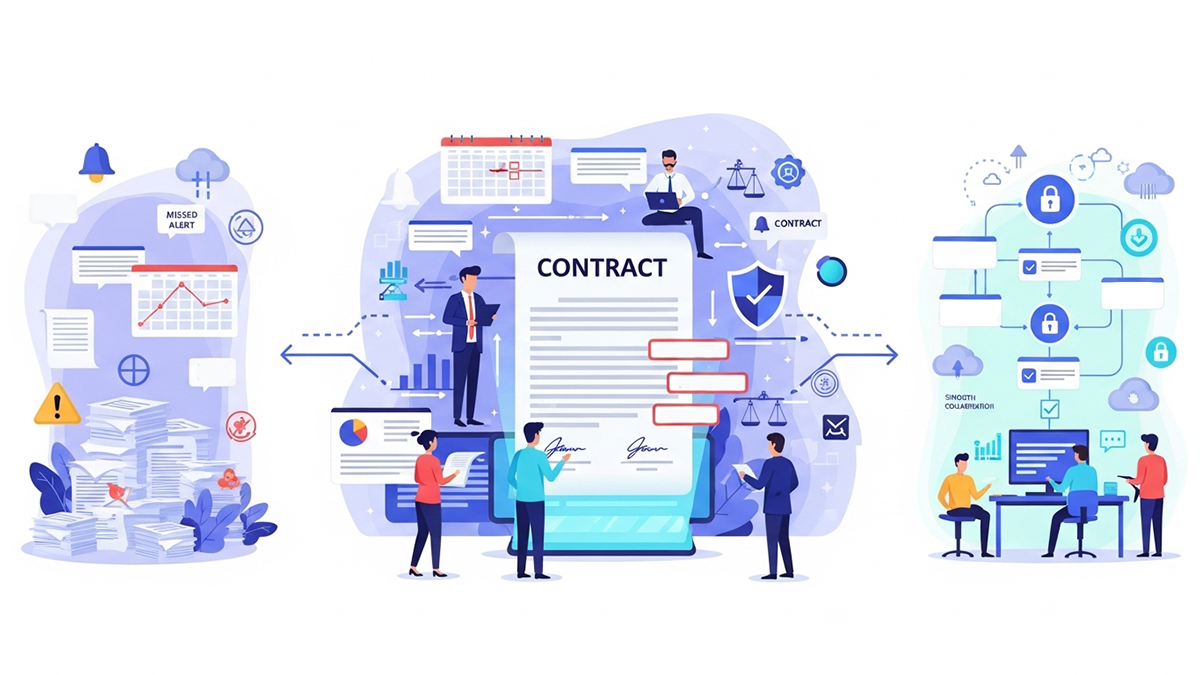
Contract management matters more than ever because contracts now sit at the center of revenue, compliance, procurement, customer delivery, and business risk. They are no longer just legal documents to be signed and stored. They define how money is earned, when payments are due, what obligations must be delivered, which risks are accepted, and how renewals and terminations are handled. When contract management is weak, the damage spreads well beyond legal. It affects finance, sales, operations, procurement, and customer success.
That is why modern businesses are rethinking contract lifecycle management. Traditional contract handling-draft, sign, file away-does not match the complexity of current commercial relationships. Today’s agreements are denser, more customized, and more operationally important. As a result, contract management has become a core business discipline rather than an administrative back-office function.
The financial stakes are also larger than many teams realize. World Commerce & Contracting research has found average contract value erosion of 8.6%, and a more recent procurement-focused study reported average value loss of 11% in procurement contracts, much of it post-signature. In plain terms, poor contract management does not just create inconvenience-it leaks measurable value.
This is the business case in one sentence: better contract management protects revenue, reduces risk, improves compliance, and keeps the business aligned to what was actually agreed. That is why contract management matters more than ever.
Contracts now shape every major business function
One reason contract management matters more now is that contracts touch nearly every department. They govern customer commitments, vendor relationships, payment terms, service levels, data protection obligations, pricing rules, renewal conditions, and termination rights. WorldCC research cited in a recent industry paper noted that, on average, 26% of an organization’s workforce is involved in contract management in some way. That is a strong indicator that contracts are not confined to legal teams anymore.
For sales teams, contracts determine how quickly deals close and how clearly negotiated terms are captured. For finance teams, contracts define billing triggers, payment timelines, and renewal economics. For procurement, contracts determine supplier obligations and commercial protections. For operations and customer success, contracts define what must actually be delivered after signature. When contract management is weak, every one of these functions becomes less efficient.
That is why contract lifecycle management has expanded in importance. It is no longer just about document handling. It is about business execution.
Poor contract management creates hidden revenue leakage
One of the biggest reasons contract management matters is revenue leakage. Businesses often focus heavily on winning a deal, but much of the financial loss happens after the contract is signed. If payment milestones are unclear, renewals are missed, notice windows are ignored, or customer-specific concessions are forgotten, the business loses value it thought it had secured.
The WorldCC figures are especially telling here. The 2025 contract management whitepaper reports average value erosion at 8.6%, while a 2026 procurement study reported average value loss of 11%. These are not small operational errors. They represent structural leakage in how organizations manage agreements after negotiation.
This is why post-signature contract management matters so much. Good contract management does not stop at drafting and signing. It continues into obligation tracking, renewal management, milestone visibility, compliance monitoring, and ongoing performance. Without that, even a well-negotiated contract can fail to deliver its expected value.
Contract management is now a major risk control function
Contract management also matters more than ever because it has become a frontline risk control mechanism. Contracts allocate liability, define remedies, set service standards, describe data obligations, and establish who bears which commercial and legal burdens. If these terms are not reviewed carefully and managed consistently, the organization can take on hidden exposure without realizing it.
The problem with weak contract management is not only bad clauses. It is also bad visibility. A company may technically have signed protections, but if no one can find the relevant terms quickly, or if obligations are not monitored after execution, those protections may not help when needed. That is why contract risk analysis and contract repository intelligence now matter just as much as basic storage.
In practical terms, strong contract management reduces risk by making key terms visible, searchable, accountable, and actionable across the full contract lifecycle.
Compliance demands have made contract management more important
Compliance is another major reason contract management matters more now. Modern agreements increasingly include privacy terms, security commitments, reporting obligations, audit rights, regulatory clauses, and industry-specific requirements. If these are buried in static documents and not tracked properly, compliance becomes inconsistent and reactive.
This is especially important because compliance failures often do not begin with bad intent. They begin with poor contract administration-missed deadlines, untracked obligations, inconsistent clauses, or lack of visibility into what a business has already promised. Strong contract lifecycle management reduces those failures by creating structure, accountability, and monitoring.
That is one of the clearest reasons contract management matters more than ever: compliance obligations are growing, and manual oversight alone does not scale.
Static contract repositories are no longer enough
Many businesses still think they are managing contracts well because they have a shared drive or a central repository. But a static contract repository is not the same as strong contract management.
A static repository helps you store a file. It may help you locate an agreement by name or date. But it does not necessarily tell you which contracts renew next quarter, which agreements contain non-standard terms, which obligations are overdue, or where risk is concentrated across the portfolio. That is the difference between storage and contract intelligence.
Modern contract management increasingly requires contract analytics and contract repository intelligence. Businesses need systems that can surface meaning, not just location. They need to know what the contract contains and what actions it requires. This is one reason AI contract management has become such a major topic in the market.
In practice, effective contract management combines structured review, reliable execution, and controlled contract creation. The following example illustrates how these capabilities fit together across the contract lifecycle.
 Hi, What do you want to Draft?

Click to upload or drag & drop
pdf, docx up to 5 MB
Click to upload or drag & drop
pdf, docx up to 5 MB
AI is changing what businesses expect from contract management
The rise of AI has changed expectations. Businesses no longer want contract management software that only handles templates, approvals, and signatures. They increasingly want platforms that can assist with drafting, review, search, risk analysis, metadata extraction, and post-signature tracking. WorldCC’s 2024 paper on AI and the contract management lifecycle explicitly frames AI as shifting contract management from transaction and compliance toward richer data and intelligence aligned to business objectives.
That does not mean the basics of contract lifecycle management are obsolete. It means the baseline has moved. Workflow is still required, but workflow alone is no longer enough. Modern contract management increasingly means combining process control with intelligence, analytics, and automation.
This is where platforms like Legitt AI are positioned. The company’s homepage describes Legitt AI as an enterprise-grade AI contract lifecycle management platform to draft, review, manage, and sign contracts faster, and it frames its broader value around AI agents that create, manage, and track contracts. That is a clear example of how the category is moving from static contract handling toward AI-native contract management.
Contract management is now essential for speed and scalability
Another reason contract management matters more than ever is scale. As businesses grow, contract volume rises. More customers, more vendors, more amendments, more renewals, more jurisdictions, and more compliance requirements all increase the operational load. Manual contracting processes that once seemed workable become bottlenecks.
When contract management is weak at scale, the business sees:
- slower sales cycles
- delayed vendor onboarding
- inconsistent approvals
- missed renewals
- higher legal workload
- weaker portfolio visibility
Strong contract management reduces those bottlenecks by standardizing workflows, clarifying ownership, and making contract data easier to act on. AI contract management pushes that further by helping teams search, review, and monitor contracts more efficiently.
That is why contract management has become a growth issue, not just an administrative issue.
Post-signature performance is now where value is won or lost
One of the biggest mindset changes in modern contract management is recognizing that the contract lifecycle does not end at signature. In fact, most value is realized-or lost-after the agreement is executed.
WorldCC research noted that the majority of contract value loss occurs post-signature, during contract performance. That is where renewals are missed, milestones drift, payment timing slips, obligations are overlooked, and the negotiated value of the agreement starts to erode.
This is why post-signature contract management, obligation tracking, and renewal management are now central topics in contract operations. A contract that is signed but not actively managed is not delivering its full business value. Strong contract management keeps the contract alive after signature and turns it into a working operational asset.
Contract management now directly affects business resilience
In a volatile market, business resilience depends on clarity. Companies need to know what suppliers owe them, what customers can demand, what renewals are coming, where they are exposed, and how quickly they can respond to disputes or changes.
Contract management matters more than ever because contracts are the legal and commercial framework for that resilience. When terms are visible and monitored, businesses can adapt faster. When they are buried in disconnected files, teams operate with uncertainty and delay.
This is also why contract management is increasingly tied to strategic planning. It is not just a legal archive; it is a source of operational intelligence.
Why businesses are moving toward AI-native contract management
As contract complexity rises, businesses are increasingly looking for systems that go beyond traditional CLM. Legitt AI is one example of this shift. Its public positioning emphasizes drafting, review, management, signing, and tracking in a single AI-driven framework, which reflects the broader market move toward AI-native contract management.
That matters because modern contract management needs to do more than store documents. It needs to support contract analysis, contract intelligence, renewal management, contract risk analysis, and contract analytics across the lifecycle. The Legitt AI website reflects that broader positioning through products such as AI Contract Generator, AI Contract Review, Repo Analyzer, and contract management software.
For teams evaluating what modern contract management should look like, the Legitt AI website is one example of how the category is now being framed: not just as workflow software, but as a broader business system for creating, managing, and tracking agreements.
The bottom line
Contract management matters more than ever because contracts now determine far more than legal formality. They shape revenue timing, compliance posture, supplier control, customer delivery, renewals, and operational risk. Weak contract management causes value leakage, missed obligations, and poor visibility. Strong contract management creates clarity, accountability, and better execution.
That is why contract lifecycle management has become a core business capability. And as businesses move toward AI contract management and contract intelligence, contract management is becoming not just more important-but more strategic than ever.
Read our complete guide on Contract Lifecycle Management.
FAQs
Why does contract management matter so much today?
Contract management matters more today because contracts now govern revenue, procurement, compliance, renewals, and ongoing delivery-not just legal terms. Poor contract management can lead to missed obligations, slow payments, compliance failures, and value leakage. WorldCC research has shown meaningful average value erosion tied to poor contracting practices.
What is the biggest business risk of poor contract management?
The biggest risk is hidden value loss after signature. Businesses often think the contract is “done” once signed, but that is when payment terms, obligations, notice periods, and renewals start affecting operations. If those are not tracked well, the business loses revenue and increases risk.
Is contract management only important for legal teams?
No. Contracts affect sales, finance, procurement, operations, and customer success as well as legal. A recent industry paper citing WorldCC research noted that, on average, 26% of an organization’s workforce is involved in contract management in some way. That reflects how cross-functional contract management has become.
How does contract management help with renewals?
Strong contract management improves renewal management by keeping renewal dates, notice windows, and termination terms visible and actionable. Without that, businesses miss renewal opportunities or allow unwanted auto-renewals and churn risks to slip through. Better visibility makes renewal planning more proactive.
Why is post-signature contract management so important?
Because most contract value is realized after execution, not before it. WorldCC research cited in a 2024 governance guide says most value erosion occurs during contract performance after signature. That makes post-signature contract management essential for protecting value.
What is the difference between a contract repository and real contract intelligence?
A basic repository helps store and retrieve documents. Real contract intelligence helps you understand what those contracts contain, what risks they create, and what actions they require. That includes contract analytics, obligation tracking, and portfolio-wide visibility.
How does AI change contract management?
AI raises expectations for what contract management can do. Instead of only managing workflow, AI can support drafting, contract review, metadata extraction, deeper search, and lifecycle intelligence. WorldCC’s AI paper specifically describes AI as shifting contract management toward richer data and business-aligned intelligence.
Where does Legitt AI fit into modern contract management?
Legitt AI is positioned as an enterprise-grade AI contract lifecycle management platform. Its public messaging focuses on drafting, reviewing, managing, signing, and tracking contracts faster, which aligns with the broader move toward AI-native contract management. The Legitt AI website is one place to see how that positioning is presented today.
What should businesses look for in modern contract management software?
They should look for more than templates and approvals. Key capabilities now include contract intelligence, contract analytics, obligation tracking, renewal management, post-signature monitoring, and AI-assisted review. The Legitt AI website is one example of how vendors are framing these capabilities as part of a broader AI contract management model.
Will contract management keep becoming more important?
Yes. Contracts are becoming more complex, more operationally important, and more connected to risk and revenue. As businesses rely more on contract intelligence and AI-native contract lifecycle management, contract management will continue to grow in strategic importance. Legitt AI and similar platforms reflect that shift in how the market now defines modern contract management.