
For most U.S. founders, contracts feel like an execution detail until something goes wrong. A customer refuses to pay. A vendor quietly auto-renews at a higher price. A contractor claims ownership over code. A channel partner underperforms, but the startup cannot exit without penalties. A large enterprise customer pushes broad indemnity language that creates outsized downside. By the time the issue surfaces, the company is not dealing with “paperwork.” It is dealing with real financial damage.
That is why contract management mistakes are not minor operational errors. They are strategic mistakes. They affect revenue recognition, margins, runway, intellectual property, legal exposure, vendor flexibility, and enterprise readiness. For early-stage and growth-stage companies, one badly structured agreement can consume months of leadership attention and wipe out the value of an otherwise good deal.
Founders often assume the biggest startup risks come from product, hiring, distribution, or fundraising. Those matter. But contract risks for startups are just as real because contracts sit underneath almost every important business relationship. Customer agreements define how revenue comes in. Vendor agreements shape cost and dependency. employment and contractor agreements affect ownership and confidentiality. Partnerships, licensing deals, and procurement contracts all influence strategic control.
This is why contract discipline becomes a serious advantage. Companies that understand their agreements do not just reduce legal risk. They negotiate better, close better, forecast better, and scale with fewer surprises. Platforms like Legitt AI are increasingly relevant here because they help founders move from reactive document handling to structured, searchable contract operations. Founders exploring this shift can review more at www.legittai.com.
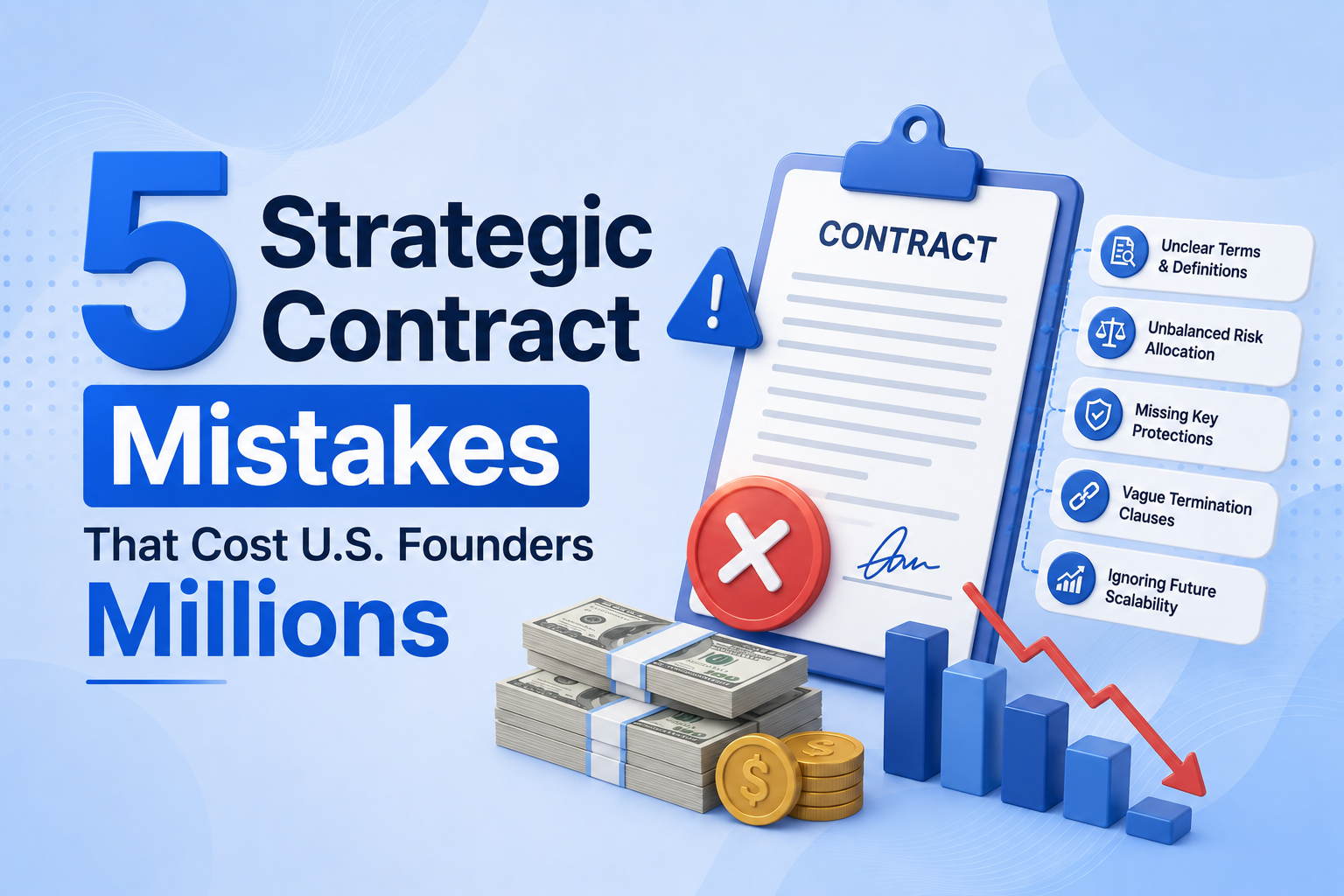
Below are five of the most damaging strategic contract mistakes U.S. founders make, why they happen, and how to avoid them before they cost the business millions.
Mistake 1: Treating Contract Review as a Last-Minute Legal Task
One of the most expensive contract management mistakes founders make is treating contract review as something that happens only at the end of a deal. Sales negotiates commercials, procurement negotiates price, leadership pushes for signature, and legal gets pulled in only when timelines are already compressed. At that point, the contract is no longer being reviewed strategically. It is being rushed.
This creates predictable problems. Risky clauses slip through because no one wants to slow momentum. Founders focus on headline value instead of liability structure, termination rights, ownership language, service obligations, or renewal mechanics. Teams accept language “just to get it done,” assuming they can deal with issues later. Often, they cannot.
The financial impact can be enormous. A contract that looks like a six-figure win may contain uncapped indemnity, broad service commitments, aggressive uptime obligations, or one-sided refund rights. A vendor agreement that looks operationally useful may create annual lock-in, price escalation, or exclusivity constraints that become painful six months later. A startup can win the deal and still lose economically.
The core problem here is mindset. Founders often see contracts as administrative closure, not strategic infrastructure. But contracts determine what the company has actually agreed to do, tolerate, pay, own, and defend. That makes them a board-level business issue, not just a legal clean-up step.
To avoid this, contract review should begin earlier in the process. Red flags should be identified before the deal is socially committed. Commercial teams should know fallback positions. Leadership should understand which clauses are negotiable, which ones need escalation, and which ones should block signature outright. This is where legitt ai contract management for startups becomes especially useful: instead of waiting until the final redline, founders can structure review around risk, obligations, and deviations much earlier.
Mistake 2: Signing Revenue Contracts With Bad Payment and Renewal Terms
Many U.S. founders obsess over closing revenue and pay too little attention to how that revenue is actually collected and protected. That is one of the most dangerous contract risks for startups because startup cash flow is fragile. A deal is not valuable simply because the total contract value looks attractive. It is valuable only if the payment structure, invoicing triggers, collection rights, and renewal economics make sense.
Founders commonly make several errors here. They accept long payment cycles from large customers without pricing for the delay. They allow vague acceptance criteria that postpone invoicing. They miss auto-renewal language tied to discount changes or notice windows. They fail to define late-payment consequences. They accept customer paper that gives the buyer too much leverage to withhold payment for minor disputes.
These issues can silently destroy working capital. A startup may believe it has sold a strong annual deal, but if invoicing is back-loaded, acceptance is subjective, and payment terms are net 60 or net 90, the contract may be a financing burden rather than a growth asset. Worse, poorly structured renewals can create underpriced second-year commitments or let customers walk away with too little notice for the startup to plan.
The right question is not just, “What is the contract value?” It is also, “How fast do we get paid, under what conditions, with what protections, and what happens on renewal?” Strong founders understand that contract structure matters as much as booking volume.
A disciplined review process should always test payment clauses for timing, clarity, dispute rights, taxes, credits, offsets, and renewal pricing. This is one reason startups begin investing earlier in contract management mistakes prevention systems instead of waiting until they are larger. Better review now saves painful collection and renewal surprises later.
Mistake 3: Failing to Lock Down Intellectual Property Ownership
For many startups, intellectual property is the company’s most valuable asset. Yet founders still sign agreements that create confusion over who owns code, deliverables, product improvements, implementation work, training data, documentation, branding assets, or derivative works. This is one of the most expensive contract risks for startups because IP ambiguity does not just create legal mess. It can hurt diligence, fundraising, partnerships, M&A, and customer trust.
The problem shows up in multiple places. A freelance developer agreement does not properly assign work product. A services contract gives a customer ownership over customizations that should remain part of the product core. A partner agreement includes broad license rights that bleed into future use cases. A vendor uses startup data in ways that were never clearly restricted. A departing contractor claims reuse rights over code fragments that are now embedded into the platform.
These issues are often ignored early because everyone is moving fast. But once the business grows, IP ownership becomes a diligence question. Investors ask whether the company cleanly owns what it claims to own. Enterprise buyers ask whether the startup can legally provide what it is selling. Acquirers examine chain of title. If the answers are messy, the consequences are real.
Founders should insist on clarity around pre-existing IP, newly created work, licenses granted, restrictions on reuse, confidential know-how, and rights to future improvements. This is not legal overkill. It is basic protection of enterprise value.
A modern review workflow can help surface these issues earlier. That is part of why Legitt AI is relevant for startups managing increasing contract volume without building a large in-house legal team. It helps teams identify risky clauses, compare language against preferred standards, and keep ownership issues from hiding inside dense agreements. Founders can also explore these workflows at www.legittai.com.
Mistake 4: Accepting One-Sided Liability, Indemnity, and Compliance Exposure
This is where seemingly normal contracts become existential. A founder lands a valuable customer or strategic vendor, gets comfortable with the commercial upside, and then accepts risk language that is completely disproportionate to the economics. That is one of the clearest contract management mistakes in startup operations.
The most common forms are broad indemnity obligations, uncapped liability, vague security commitments, sweeping warranties, and compliance language that sounds harmless but creates open-ended exposure. The startup may be agreeing to defend third-party claims, absorb losses beyond the contract value, or guarantee performance levels it cannot fully control. Sometimes the liability cap exists on paper, but carve-outs are so broad that the cap barely matters.
For U.S. founders, this is especially important in enterprise deals. Big counterparties often send paper designed to shift risk downstream. If the startup does not push back, the contract can create downside far larger than the revenue involved. One major claim, breach allegation, or service dispute can consume leadership bandwidth and money that the company cannot afford to lose.
Founders need to understand a simple principle: not every dollar of revenue is worth every unit of contractual exposure. A startup should usually aim for reasonable liability caps, balanced indemnity structures, specific warranty language, and clear boundaries around regulatory or security commitments. If the counterparty wants exceptions, the company should know exactly what it is taking on and why.
This is also where a CLM Software mindset becomes valuable. The issue is not just reviewing one contract in isolation. It is maintaining consistency across the portfolio, so risky exceptions are visible and not repeatedly accepted under pressure. Over time, repeated small concessions become systemic exposure.
Mistake 5: Storing Signed Contracts and Forgetting Them
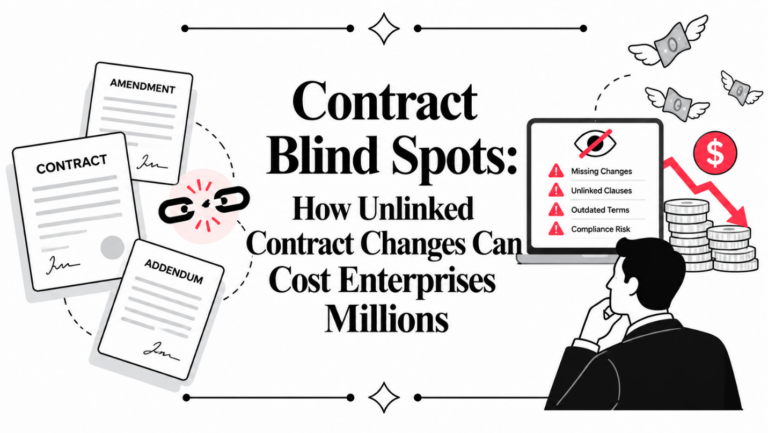
One of the most underestimated contract management mistakes is what happens after signature. Founders often believe the work is done once the document is executed. In reality, post-signature is where many million-dollar problems begin. Contracts renew automatically. Notice deadlines pass. Minimum commitments stay hidden. Price increases trigger silently. Service obligations are missed. Reporting requirements go unmanaged. Customer concessions granted in negotiation are forgotten by the delivery team.
This is why storage is not enough. A folder full of signed PDFs is not contract management. It is archived risk.
The financial impact comes in multiple forms. Startups overpay vendors because no one tracked renewal notice periods. They lose expansion opportunities because customer obligations were not monitored. They miss revenue because billing triggers were buried in an exhibit. They underperform contractual promises because delivery teams never saw the negotiated service language. They fail audits or disputes because no one can quickly locate what was actually agreed.
This is precisely where legitt ai contract management for startups becomes a practical strategic capability instead of a nice-to-have legal tool. Startups need active visibility into obligations, deadlines, payment terms, renewals, risk positions, and contract deviations across the business. That is what transforms contract ops from passive storage into active operational control.
For founders, the lesson is clear: execution is not the end of contract work. It is the beginning of contract accountability.
Why These Mistakes Compound as Startups Scale
The most dangerous thing about these five mistakes is that they compound. A startup may survive one weak contract. It struggles when the same issues repeat across dozens or hundreds of agreements.
Poor payment clauses create cash stress. Weak IP ownership creates diligence questions. One-sided indemnity creates hidden liability. Post-signature neglect causes missed renewals and operational confusion. Rushed review normalizes bad habits. By the time the company decides to “get organized,” the contract estate is already inconsistent and hard to unwind.
That is why founders should think about contract management as early infrastructure, not late-stage polish. The goal is not to build a bureaucracy. The goal is to build a repeatable system for protecting the company while still moving fast.
This includes having clear templates, fallback clause positions, approval rules, searchable repositories, renewal tracking, and better review workflows. It also means leadership understanding where the true economic and legal risks sit. Smart founders do not outsource all contract understanding. They build enough fluency to know when a contract is safe, when it needs escalation, and when a deal should be restructured.
Final Thoughts
The biggest startup contract failures rarely come from dramatic courtroom battles in year one. They come from avoidable decisions made under speed, optimism, and pressure. A founder wants the logo, the partnership, the vendor solution, the enterprise customer, the quick close. The contract gets signed. Months later, the business discovers what it actually agreed to.
That is why contract risks for startups deserve serious attention. The right contract structure protects cash flow, IP, flexibility, and downside. The wrong structure creates hidden drag that compounds as the company grows.
The best founders treat contracts as strategic tools, not just legal documents. They know that strong review, structured tracking, and operational visibility create leverage. Tools like Legitt AI can help make that process scalable, especially for startups that need enterprise-grade control without enterprise-sized legal teams. In the long run, avoiding major contract management mistakes is not just about reducing risk. It is about preserving enterprise value.